



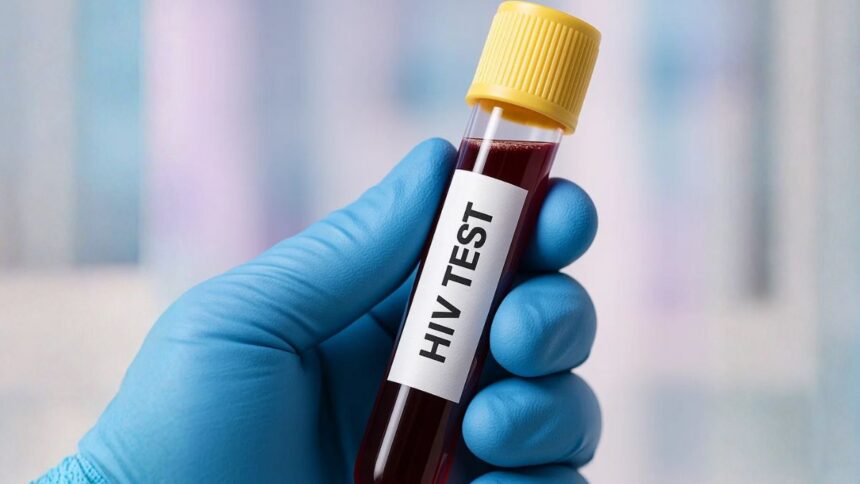
Scientists at the University of Cologne have announced a breakthrough in HIV research with the discovery of an unusually powerful antibody called 04_A06. Early tests show that this antibody can neutralize almost every HIV-1 strain that has been tested so far, making it one of the strongest tools ever found against the virus.
The research, done by an international scientific team and published in Nature Immunology, is now being seen as a possible turning point in the global fight against HIV and AIDS.
HIV continues to be one of the most challenging viruses in the world because it changes very quickly. As it mutates, many treatments and antibodies lose their strength. But 04_A06 appears to work differently. It targets a common CD4 binding site, a place on the virus that is shared by hundreds of HIV strains.
Because this site is so important for the virus to survive, HIV cannot easily change it without hurting itself. That is why the antibody was able to stop infection in laboratory experiments and even reduce the virus to undetectable levels in humanized mice.
During the study, researchers explained that HIV often forces the immune system into a constant race. The virus mutates again and again, making it hard for normal antibodies to fight it. But there are rare people called “elite neutralizers” who naturally make special antibodies that can fight many versions of HIV at the same time. These individuals provided the key to discovering 04_A06.

The scientists tested blood samples from 2,354 HIV-positive volunteers from Tanzania, Nepal, Cameroon, and Germany. Out of these thousands of samples, they found 32 elite neutralizers. From these elite neutralizers, researchers collected immune cells and produced more than 800 different antibodies in the lab. One antibody stood out immediately because of its strength and wide coverage 04_A06.
The antibody comes from a rare VH1-2 gene segment and includes an unusual 11-amino-acid insertion. This long structure allows the antibody to reach deeper into the virus and attach itself to areas the virus cannot afford to change. Because of this, the antibody keeps working even when the virus tries to escape, something that weakens many other HIV antibodies.
In an interview about the study, Dr. Lutz Gieselmann, clinician scientist at the University of Cologne and first author of the research, said, “With 04_A06, we have identified an antibody that, on the one hand, exhibits extremely broad activity, and on the other hand, escapes the virus’s typical defense mechanisms. This opens up potentially a promising route for future clinical intervention.”
The antibody also performed extremely well in side-by-side comparisons with well-known HIV antibodies such as VRC01. While VRC01 is a strong antibody used in several clinical studies, HIV has already learned how to resist it. But 04_A06 neutralized nearly 80 percent of the strains that resisted VRC01, showing how powerful it can be.

To test the antibody in living conditions, the research team used humanized mice, which are mice engineered to have human-like immune systems. The results were dramatic. Mice treated with 04_A06 showed long-lasting viral suppression, and in many cases, the virus became undetectable. When treatment stopped, the virus did not immediately return, showing that a steady level of the antibody may provide long-term protection.
Scientists also used computer models to predict how well 04_A06 might work in humans. These models showed that a single long-acting injection of the antibody could provide more than 93 percent protection for up to six months. This means that, if approved, people at high risk of HIV infection might one day need only one or two shots a year to stay protected.
The structural studies of the antibody showed why it is so hard for HIV to escape from it. According to cryo-electron microscopy, the long amino acid chain in 04_A06 acts like an extended arm. It reaches areas of the virus that do not usually mutate because they are essential for the virus to function. This explains why 04_A06 continues to work even against strains that escape other antibodies.
The discovery has now been licensed to Vir Biotechnology, Inc., a company known for its work in antibody-based medicines. The next step is to begin clinical trials to test the antibody on human volunteers.
The study’s lead author, Professor Florian Klein, said, “Success in this work was due to close collaboration with African, Nepalese, and US study centers. The next stage is to further test the safety and efficacy of the antibody in clinical studies as a step towards patient treatment.”









I would like to be a Test Person please any time im ready to avail myself thanks ope to hear from you thanks