Eight-year-old Sidra Al Bordeeni could not stop smiling as she rode a bicycle around a Jordanian refugee camp. It was her first time on a bike since she lost her arm in a missile strike in Gaza a year ago. Her joy came from a new prosthetic arm, built 4,000 kilometers away in Karachi by Pakistani startup Bioniks.
A strike injured Sidra while she sheltered at Nuseirat School. People had turned the school into a refuge from Israeli airstrikes. Her mother, Sabreen Al Bordeeni, recalled the day her daughter sustained injuries. She also recalled how Gaza’s collapsing health system made it impossible to save her daughter’s hand.
“She’s out playing, and all her friends and siblings are fascinated by her arm,” Sabreen said in a phone call. “I can’t express how grateful I am to see my daughter happy.”
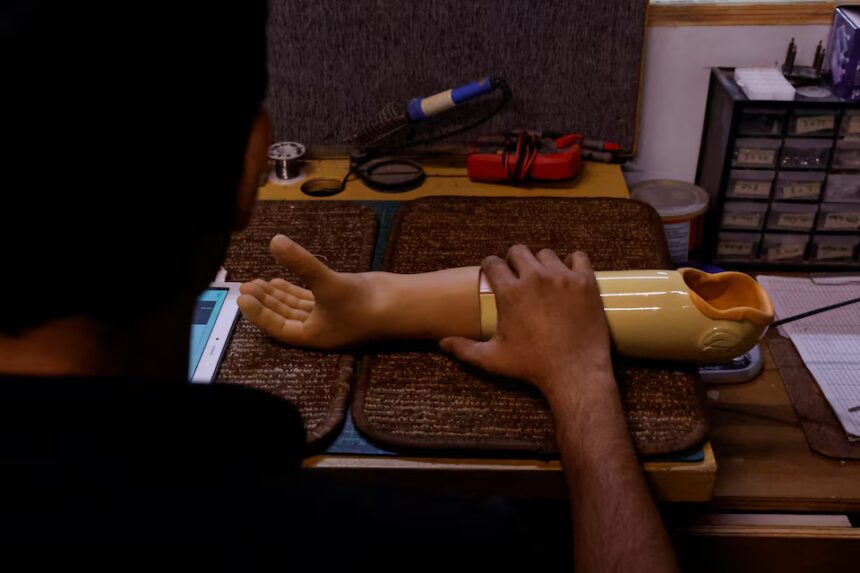
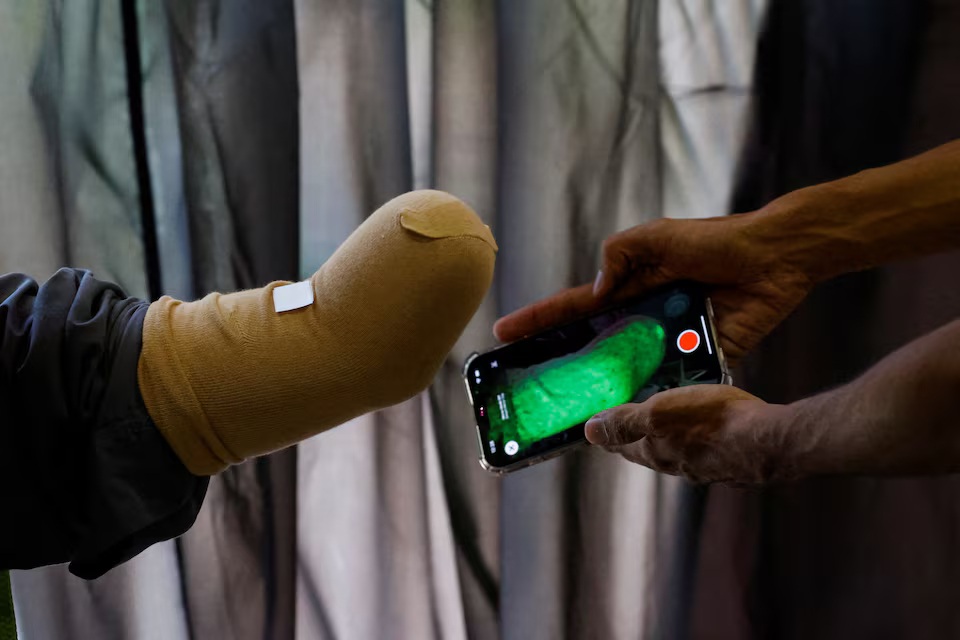
The prosthetic was designed and created by Bioniks, a company that makes affordable, 3D-printed bionic limbs. Using a smartphone app, Bioniks was able to take photos from different angles and build a 3D model of Sidra’s arm. This remote process allowed them to help her even from thousands of kilometers away.
Bioniks CEO Anas Niaz flew from Karachi to Amman to deliver the prosthetic personally. He also met three-year-old Habebat Allah, another Gaza survivor, who lost both her arms and a leg in the conflict. Donations made the startup’s first overseas delivery possible. Mafaz Clinic in Amman funded Sidra’s arm, while generous Pakistanis contributed to pay for Habebat’s devices.
Each Bioniks prosthetic costs about $2,500, far lower than the $10,000–$20,000 price tags for similar devices in the United States. While their designs are less advanced than high-tech Western options, Bioniks’ arms offer practical functionality for children and are tailored to be lightweight for young users.
“We wanted to create a solution for children in war zones who are too often forgotten,” Niaz said. “Our dream is to expand to other places like Ukraine and help thousands more children.”
The need for such solutions is growing fast. Gaza has seen one of the highest rates of child amputations in recent history. The United Nations reported around 4,500 new amputees in Gaza, many of them children. A study by the Palestinian Bureau of Statistics in April showed at least 7,000 children injured since Israel’s war in Gaza began in October 2023.

The World Health Organization has described Gaza’s health system as “on its knees” due to ongoing border closures that have blocked medical supplies and access to specialized care.
“Where it’s nearly impossible for healthcare professionals and patients to meet, remote treatment bridges a critical gap, making assessments, fittings, and follow-up possible without travel or specialized centers,” said Asadullah Khan, Clinic Manager at ProActive Prosthetic in Leeds, UK.
Bioniks hopes to lead such efforts globally but faces funding challenges. The company has already provided over 1,000 prosthetics inside Pakistan since 2021, supported by patient payments, corporate sponsorships, and donations.
Children like Sidra often need replacements every 12 to 18 months as they grow. But Niaz explained the costs are manageable because the team only needs to change a few parts. The team can also reuse the rest of the device for another child.
To help children embrace their prosthetics, Bioniks sometimes adds special designs. These designs draw inspiration from popular characters like Marvel’s Iron Man or Disney’s Elsa. This helps young users feel proud and confident wearing their new limbs.
Sidra is still adjusting to her new hand, which she has decorated with a small bracelet. For the past year, she wanted to make a heart shape with her hands. But she would ask others to complete it for her. This time, she formed the shape herself. She also sent a photo of it to her father. Her father remains trapped in Gaza.
“What I’m looking forward to most is using both my arms to finally hug my father when I see him,” Sidra said softly.