
Scientists at the Babraham Institute in Cambridge have achieved a breakthrough in anti-ageing science. In a study, researchers were able to reverse the biological age of human skin cells by about 30 years using a shortened reprogramming process.
The method relies on Yamanaka factors, the same molecules used to make stem cells, but the treatment was safely stopped early before the cells lost their identity. The result was a set of fibroblast cells that behaved like much younger cells while still keeping their original function.
The researchers published their findings in the scientific journal eLife. Experts say this work could lead to new medical treatments, but scientists need many more tests before they can use it in humans. The research focuses on the idea that ageing is not just a number, but a process that people can potentially slow down or reverse at the cellular level.
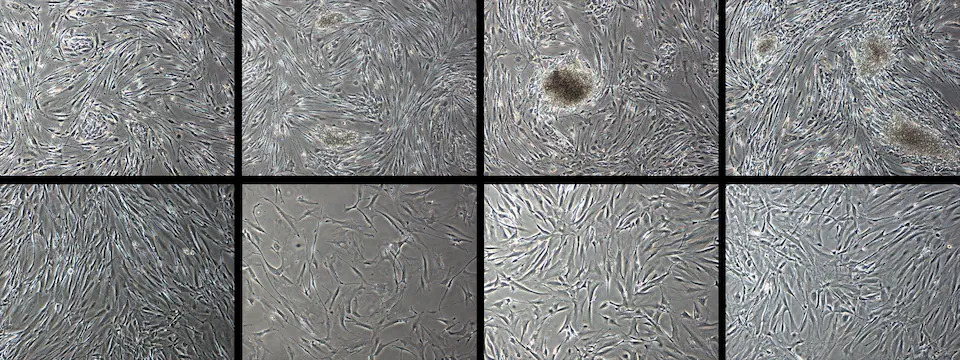
The Babraham Institute team developed a technique that reverse human skin cells in just 13 days, instead of the standard 50 days used to create stem cells. The full reprogramming process usually removes all memory from a cell, turning it into a stem cell that can become any type of cell.
But this new technique, called “maturation phase transient reprogramming,” stops the process halfway. This allows the cell to lose signs of ageing but still return to its original role as a skin fibroblast.
When these rejuvenated cells were compared with untreated older cells, the difference was striking. The treated cells produced more collagen, which is important for skin strength, structure and healing. In lab tests where scientists created an artificial wound, the rejuvenated fibroblasts moved into the damaged area faster than the older cells. This behaviour normally appears in younger cells, suggesting that the treatment truly restored youthful function.
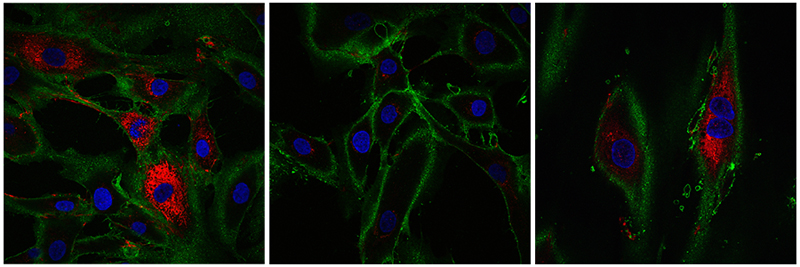
Scientists also tested the epigenetic clock, which is a measure of biological age based on chemical marks on DNA. They also looked at the transcriptome, which includes all the gene messages active in the cell. In both tests, the treated cells matched the profile of cells that were around 30 years younger.
Dr. Diljeet Gill, who conducted most of the work as a PhD student, explained how much the field has changed. He said: “Our understanding of ageing on a molecular level has progressed over the last decade, giving rise to techniques that allow researchers to measure age-related biological changes in human cells. We were able to apply this to our experiment to determine the extent of reprogramming our new method achieved.”
He added, “Our results represent a big step forward in our understanding of cell reprogramming. We have proved that cells can regain youth without losing their function. Furthermore, rejuvenation restores some function to old cells. We also saw a reversal of human skin cell ageing indicators in genes associated with diseases. This finding is particularly promising for the future of this work.
The study also showed encouraging changes in genes linked to age-related diseases. The APBA2 gene, which is associated with Alzheimer’s disease, shifted toward youthful activity levels. Another gene, MAF, which plays a role in cataract development, also appeared younger. These early signs show that partial reprogramming could one day help in treating age-related conditions, if made safe enough.
Professor Wolf Reik, who led the research group, said the work opens new ideas for future therapies. “This work has very exciting implications. Eventually, we may be able to identify genes that rejuvenate without reprogramming, and specifically target those to reduce the effects of ageing. This approach holds promise for valuable discoveries that could open up an amazing therapeutic horizon.”
Regenerative medicine as a field aims to repair or replace damaged or old cells. Scientists can make induced stem cells. However, they still find it difficult to reliably turn them back into every type of specialised cell. In contrast, the Babraham Institute’s work avoids that problem. Researchers take an older cell, make it younger, and then let it return to its natural role.
Also Read: Swedish Scientists Create Nanorobots That Kill Cancer Cells
However, even with these promising results, researchers warn that the technique is still in the early stages. Scientists need to understand exactly how the cells restore younger behaviour and whether any long-term risks exist. One concern is that reprogramming cells, even partially, could sometimes lead to cancer, so safety studies will be essential.
Several scientists involved in this research have already joined Altos Labs, a large biotechnology company backed by major investors and multiple Nobel Prize winners. The company aims to reverse cellular ageing to prevent diseases linked with old age. The Babraham Institute clarified that it is independent and not part of the University of Cambridge.