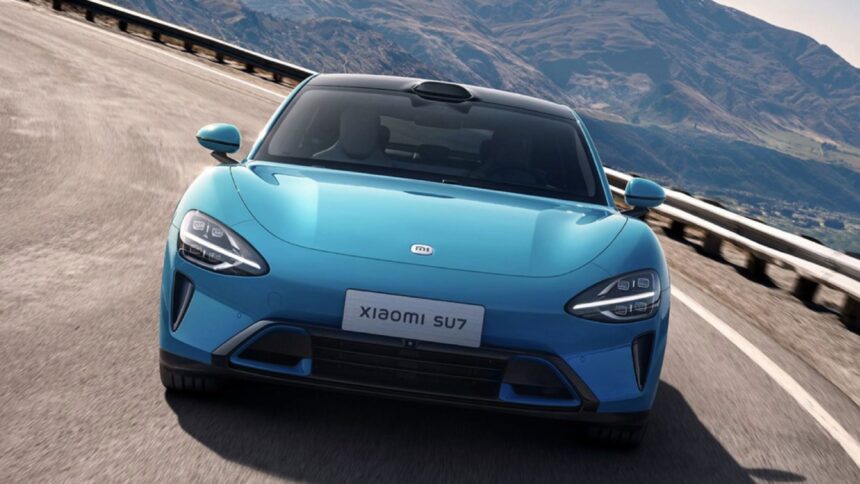
A Xiaomi SU7 Pro electric sedan has posted one of the strongest battery longevity results ever recorded in real-world EV testing. After traveling 265,000 kilometers (165,000 miles) in just 18 months, the vehicle’s battery health was officially measured at 94.5 percent by a Xiaomi-authorized service center a figure that surpasses the retention benchmarks set by every major EV manufacturer currently operating at scale.
- 600 km a Day: The Driving Conditions Behind the Data
- Battery Specifications and Charge Cycle Analysis
- How the Xiaomi SU7 Compares to Industry Warranty Standards
- Viral Response and Lei Jun’s Endorsement
- Feng’s Next Target: 600,000 Kilometers in Three Years
- What This Means for EV Battery Durability Expectations
The case was first reported by CarNewsChina and centers on Mr. Feng, a Chinese EV owner whose daily driving routine, averaging 600 km (373 miles) per day, pushed the first-generation SU7 Pro well beyond what most private vehicles experience across their entire lifespan.
600 km a Day: The Driving Conditions Behind the Data
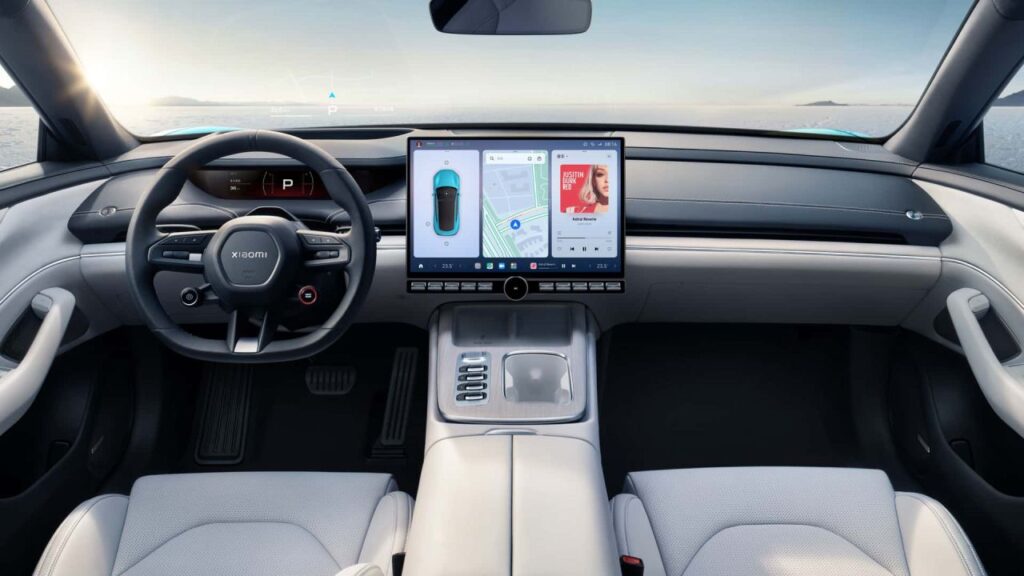
Mr. Feng’s usage pattern is extreme by any standard. Covering approximately 600 kilometers every day, roughly equivalent to a New York-to-Boston round trip, he logged the equivalent of 6.6 full circuits of the Earth within a year and a half.
When Xiaomi technicians measured the battery health, the result surprised even the owner. “Xiaomi staff told me the results, and I was genuinely shocked,” Feng said. “I expected the battery health to be around 90 percent at best. Seeing 94.5 percent was truly surprising.”
Beyond battery retention, the service inspection revealed no brake pad replacements had been required, a plausible outcome given the regenerative braking systems common in modern EVs. Coolant purity remained intact, with a freezing point of -38°C and no water detected.
Battery Specifications and Charge Cycle Analysis
The SU7 Pro is equipped with a CATL-supplied lithium iron phosphate Shenxing battery pack rated at 94.3 kWh. Based on an estimated energy consumption of approximately 18 kWh per 100 kilometers, the battery has completed roughly 506 full charge-discharge cycles over the 265,000 km distance.
In practice, the total number of partial charge cycles is considerably higher. Most EV drivers, including high-mileage users, charge between 20 and 80 percent of battery capacity rather than running the cell to zero and charging to full. Each partial cycle counts fractionally toward total degradation, meaning the Shenxing battery has withstood a substantially greater load than 506 full equivalents suggest.
Despite that, the measured capacity loss stands at just 5.5 percentage points from the original rating, a result that industry analysts and competing publications have described as exceptional for lithium-based battery chemistry under sustained commercial-level use.
How the Xiaomi SU7 Compares to Industry Warranty Standards
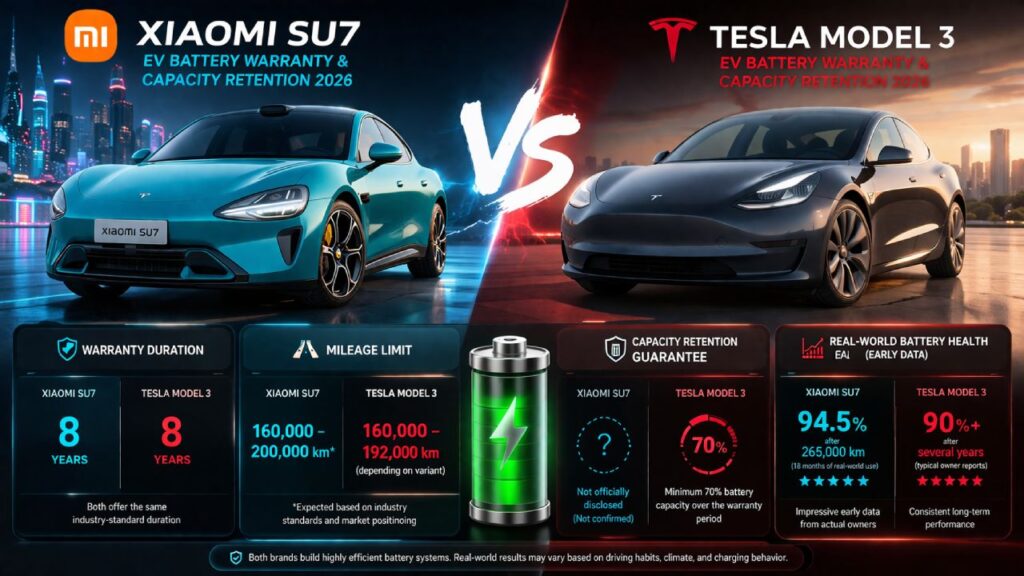
Most EV manufacturers warranty their battery packs for eight years or 150,000 kilometers, with permissible degradation thresholds of 20 to 30 percent before a warranty claim becomes valid.
Tesla, a globally recognized benchmark for battery engineering, warrants the Model 3 and Model Y for eight years or 160,000 kilometers, with a minimum retained capacity of 70 percent. Mr. Feng’s SU7 Pro has exceeded Tesla’s warranty distance by more than 65 percent while retaining 24.5 percentage points more capacity than Tesla’s minimum threshold for the same model range.
BYD offers one of the most generous battery warranties in China. The warranty covers 250,000 kilometers or eight years. It guarantees a minimum retention of 70 percent. However, even this warranty falls behind the performance demonstrated by Feng’s vehicle. Feng’s vehicle retained 94.5 percent of its battery capacity at 265,000 km.
For context, the Xiaomi SU7 Pro starts at 245,900 yuan (approximately $35,400 USD) in China. The fuel savings Feng reported over 100,000 yuan ($14,300) represent a substantial fraction of the vehicle’s purchase price recovered through reduced operating costs over just 18 months.
For background on Xiaomi’s EV ambitions, read our earlier coverage: Xiaomi SU7 Ultra: World’s Fastest Four-Door Electric Hypercar Unveiled and Xiaomi SU7 Gets 15,000 Orders in 34 Minutes After Sales Open in China.
Viral Response and Lei Jun’s Endorsement
The data entered public circulation through a video posted on Bilibili. A user identified as ‘Jackson’s Sunset Drive’ posted the video. The footage accumulated millions of combined views across Bilibili and Weibo within days of publication.
The attention reached Xiaomi CEO Lei Jun. In response, he amplified the post through his personal Weibo account. Notably, Lei Jun’s endorsement is significant in the context of Chinese consumer technology. This is because the executive has cultivated a substantial personal brand around transparency and direct engagement with Xiaomi’s user base. As a result, his public sharing of third-party performance data carries credibility weight that a formal press release would not.
Xiaomi only entered the electric vehicle market in March 2024. The company delivered 258,164 SU7 units in 2025. This surpassed Tesla Model 3 sales in the Chinese market for the year. Lei Jun’s decision to highlight Feng’s mileage data publicly reflects strategic confidence in the underlying product engineering. This comes at a time when the refreshed second-generation SU7 is entering the market.
Related: Xiaomi Factory Becomes Top Tourist Attraction in China. A look at how the brand is building consumer trust beyond product launches.
Feng’s Next Target: 600,000 Kilometers in Three Years
Mr. Feng has stated publicly that he intends to continue driving the same vehicle. His long-term target is 600,000 kilometers within three years. If he achieves this, he would mark himself as the first known Xiaomi SU7 owner to reach that milestone on a single battery pack. This assumes no pack replacement is required.
He currently averages approximately 600 km per day. At this rate, he could reach the 600,000 km target in roughly 1,000 days from the start of ownership. This falls within the three-year window he has set.
What This Means for EV Battery Durability Expectations
This case does not represent the performance profile of an entire production fleet. Specifically, several factors influence battery degradation across a population of vehicles. These include regional climate, individual charging behavior, temperature management systems, and manufacturing variance between cells.
However, single-vehicle high-mileage data of this quality provides a credible data point for assessing real-world battery durability. An official service center measured this data rather than the owner self-reporting it. As a result, the data suggests that modern lithium iron phosphate chemistry can retain capacity significantly beyond what conservative manufacturer warranties have historically implied. This works when the chemistry pairs with effective thermal management and a well-calibrated battery management system.
Additionally, the first-generation production run of the Xiaomi SU7 Pro has ended. Now, a refreshed version is entering the Chinese market. It features an upgraded 96.3 kWh battery pack and an extended range of 901 kilometers. For existing first-generation SU7 owners, Feng’s results provide quantified reassurance. Real-world evidence supports long-term residual value and performance reliability.
For broader context on the Chinese EV market and battery innovation: Canada Opens Its Doors to Chinese Electric Vehicles.