

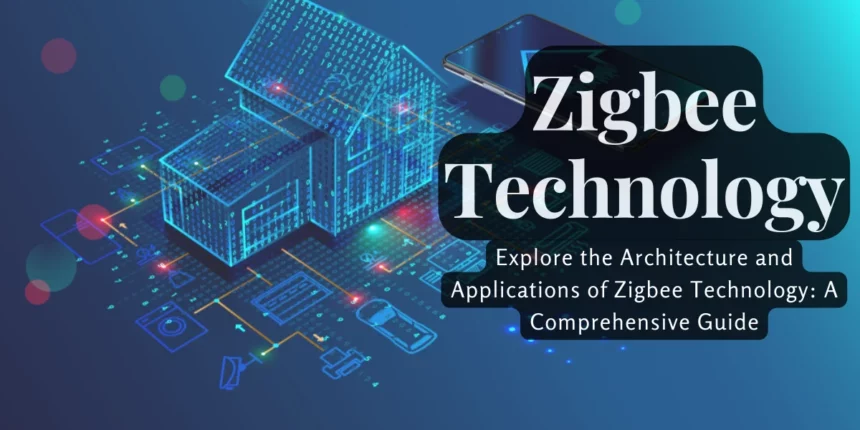
Have you ever wondered how all the smart devices in your home communicate with each other? They use Zigbee Technology, a wireless communication protocol for low-power and low-data rate applications. In this article, we’ll explain everything you need to know about Zigbee Technology in simple terms.
- What is Zigbee Technology?
- How Does Zigbee Technology Work?
- Characteristics of Zigbee Technology:
- Types of Zigbee Devices:
- Types of Zigbee Technology Network Topologies:
- Zigbee Technology: How Devices Communicate with Each Other?
- Channel Access Methods: Contention-Based and Contention-Free
- Contention-Free Method: Guaranteed Time Slots
- Example of Mesh Topology
- Contention-Based Method: Carrier Sense Multiple Access
- Zigbee Technology: An Overview of Its Architecture
- Physical Layer: The Foundation
- MAC Layer: The Coordinator
- Network Layer: The Builder
- Application Support Sub Layer: The Assistant
- Application Layer: The User
- Zigbee Technology Revolutionizes Various Industries
- More Stories:
What is Zigbee Technology?
Zigbee Technology is a wireless communication protocol that provides low-power, low-data rate communication between devices. It operates on the IEEE 802.15.4 standard and uses a mesh network-based protocol that allows devices to communicate with each other through multiple paths. This design ensures high reliability and redundancy in the network.
Applications of Zigbee Technology:
Zigbee Technology has many applications, including home automation, healthcare, lighting control, intelligent energy, and building automation. Low power consumption and high reliability make it a suitable communication protocol for embedded systems, remote sensing, and control applications.
Topology of Zigbee Technology:
Zigbee Technology operates on a star or mesh topology. In a star topology, the central device communicates with all the end devices, while in a mesh topology, devices can communicate with each other, creating multiple paths to transmit data. The mesh topology enables Zigbee Technology to create a highly reliable network, ensuring data transmission even if some devices fail.
More info from official site its price and data rate can be verified from here
Why Use Zigbee Technology?
You might wonder why we need another short-range communication technology like Zigbee when we already have Bluetooth and wifi. Well, Zigbee Technology is designed specifically for control and sensor networks. It’s low-power, reliable, and has many applications, from home automation to healthcare to lighting control.
How Does Zigbee Technology Work?
Zigbee Technology uses a mesh network, meaning that each device can communicate with other devices. This creates multiple paths for data to travel, which makes the network more reliable. Even if one device stops working, the others can still communicate with each other and get the job done.
Wi-Fi vs Bluetooth
| Features/Specifications | Wi-Fi | Bluetooth |
|---|---|---|
| Range | Up to 100 meters outdoors, 40 meters indoors | Up to 10 meters |
| Data Rate | Up to 10 Gbps | Up to 3 Mbps |
| Power Consumption | High | Low |
| Security | WPA3, WPA2, WEP, etc. | AES-128 |
| Network Topology | Point-to-point or Point-to-multipoint | Point-to-point |
| Frequency | 2.4 GHz and 5 GHz | 2.4 GHz |
| Typical Applications | Internet access, streaming, large file transfers | Wireless audio streaming, file transfer between devices, smart home devices |
When it comes to wireless communication, there are a few different options. You might have heard of Wifi and Bluetooth before. While these are both great technologies for certain things, there are better options for some things.
Wifi is a wireless networking technology commonly used to connect devices to the internet. It’s great for streaming videos, browsing the web, and other similar tasks. However, it’s only sometimes the best option for small devices that don’t need to be connected to the internet all the time.

Bluetooth is a wireless communication protocol for connecting devices over short distances. It’s commonly used for things like wireless headphones and speakers and for transferring files between devices. However, there are better options for devices that need to communicate with each other over long distances.
| Technology | Wi-Fi | Bluetooth | Zigbee |
|---|---|---|---|
| Power Consumption | High | Low | Low |
| Data Rate | High (up to 10 Gbps) | Low to Medium (up to 3 Mbps) | Low (20-250 kbps) |
| Range | Long (up to 100 meters) | Short (up to 10 meters) | Short to Medium (up to 300 meters) |
| Network Join Time | Fast | Fast | Slow (around 30 seconds) |
| Network Size | Medium to Large (up to thousands of devices) | Small to Medium (up to 8 devices per piconet) | Small to Large (up to 65,000 devices) |
| Implementation Cost | High | Low | Low |
| Security | Standard-based (WEP, WPA, WPA2) | AES-CCMP encryption | AES-128 encryption |
That’s where Zigbee technology comes in. It’s a wireless communication protocol designed specifically for the Internet of things (IoT). It uses low-power digital radio signals to create networks for personal area networks. This means that it’s perfect for devices like sensors and control devices that need to communicate with each other over short distances.
While Wifi and Bluetooth are great for certain things, there are better options for some things. Regarding wireless communication for small devices, Zigbee technology is a standard Internet of things (IoT) network that provides a reliable, low-power solution.
Internet of Things (IoT)

IoT is defined as a simple network in which data is exchanged. In simple words, as the name applies, specific essential data needed to switch from one computer to another is exchanged so that it can be uploaded to the internet. The same data can be collected through other techniques, but this technology, known as ZigBee technology, is specially invented for it.
ZigBee Technology transfers simple data, just like data received from sensors. Zigbee technology cab maintains a low data rate of about 250 kbps. The operating frequencies are 868 MHz, 902 to 928 MHz, and 2.4 GHz. ZigBee technology is mainly applied for applications that need low power, low cost, low-rated data, and a much longer battery. As seen nowadays in every field of communication, IoT plays a vital role in prototype and large industrial projects.
Characteristics of Zigbee Technology:
Zigbee Technology has some unique characteristics which make it useful for different applications. Here’s what you need to know about them:
| Characteristic | Description |
|---|---|
| Low power consumption | Devices can operate for several years on a single battery |
| Low data rate | Data rate varies from 20 kbps to 250 kbps |
| Short-range | Range can go up to 75-100 meters indoors, 300 meters outdoors |
| Network join time | Takes around 30 seconds to transfer data |
| Supports large networks | Supports up to 65,000 devices in theory, but 240 in practice |
| Low cost and cheap implementation | Simplicity in technology and open-source protocol result in low cost |
| Security | Uses AES Algorithm, a robust and secure cryptographic encryption |
- Low Power Consumption:
One of the most significant advantages of Zigbee is its low power consumption. This means that devices using Zigbee technology can operate for several years using a single power supply. They can save battery life by going into sleep mode when not in use.
- Low Data Rate:
| Wifi | Bluetooth |
|---|---|
| 11 Mbps | 1 Mbps |
The data rate of Zigbee technology devices is low, ranging from 20 to 250 kilobits per second. While this is slower than Wi-Fi and Bluetooth, it is still enough for short-range communication.
- Short-Range Communication:
Zigbee devices range from 75-100 meters indoors to 300 meters outdoors. This makes it ideal for use in buildings and homes.
- Fast Network Join Time:
Zigbee technology takes about 30 seconds to transfer data faster than Wi-Fi and Bluetooth. This means it can connect to devices quickly and efficiently.
| Wifi | Bluetooth |
|---|---|
| Up to 3 seconds | Up to 10 seconds |
- Supports Small and Large Networks:
Zigbee can support up to 65,000 devices in a single system, making it useful for small and large networks. This is much higher than Wi-Fi and Bluetooth, which makes it a better choice for many applications.
Bluetooth.
| WIFI | Bluetooth |
|---|---|
| Up to 32 devices | Up to 7 devices |
- Low Cost and Easy Implementation:
Zigbee technology is simple, open-source, and cost-effective, making it an affordable option for many manufacturers. This is because they don’t have to pay license fees, which makes it cheaper for everyone.
- High Security:
Zigbee uses the AES cryptographic algorithm for data encryption and authentication, making it one of the most secure cryptographic encryption methods available. This means it is safe for sensitive information, such as bank transactions.
Types of Zigbee Devices:

Zigbee technology is one of the most prominent technologies that has recently gained much popularity. With its exceptional features and qualities, it has become an essential part of IoT devices used in various fields, including home automation, industrial applications, and intelligent buildings.
As we know, Zigbee technology is a wireless networking protocol that is designed for low-cost, low-power, and low-data-rate applications. There are three types of Zigbee devices, each with unique capabilities and functions. In this article, we will discuss the types of Zigbee devices and their functions in detail.
| Types of Zigbee Devices | End Devices | Routers | Coordinators |
|---|---|---|---|
| Function | Communicate with Routers or Coordinators | Route data between other devices | Control the network |
| Power Consumption | Low | Medium | High |
| Processing Capability | Low | Medium | High |
| Range | Short | Medium | Long |
| Battery Life | Long | Medium | Short |
| Cost | Low | Medium | High |
| Examples | Sensors, switches, thermostats | Smart plugs, smart bulbs, gateways | Smart hubs, gateways, bridges |
Coordinators:
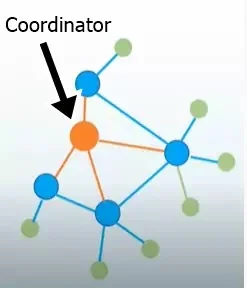
The Zigbee coordinator is the most capable device, and it is one of those devices which starts the network. It is responsible for performing many tasks, including selecting the best channel for communication, allocating a unique address to each device, and initiating and transferring messages inside the network. The coordinator is the device that initiates the formation of the network, and there is only one coordinator device in each network.
Routers:
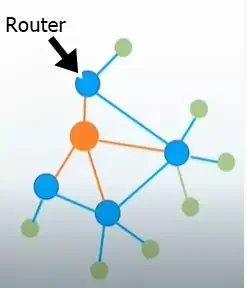
Routers act as intermediate nodes between the coordinator and end devices. They are responsible for routing traffic between nodes and receiving and storing messages intended for children. Routers can also allow other routers and end devices to join the network. With their capability to store messages, routers can help reduce the traffic between devices and overall network congestion.
End Devices:
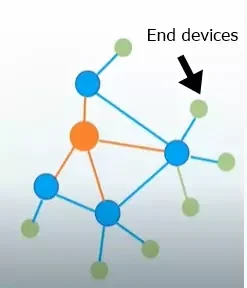
End devices contain just enough information to talk to the parent node. They can also sleep, which is a better option for saving the battery of devices. All traffic to an end device is first routed to its parent node, which sends the messages to the end device. End devices have low power consumption and are primarily used for transmitting data to the coordinator or routers.
Zigbee Devices Features and Specifications
| Device Type | Features | Specifications |
|---|---|---|
| Zigbee Coordinator | Acts as the main controller of the network, Can initiate and manage network formation, Stores network information and security keys. | Supports multiple Zigbee end devices, Supports network layer security, Maximum number of connected devices: 20-255. |
| Zigbee Router | Extends the network range by relaying messages between devices, Can act as a repeater, Can also act as an end device. | Supports network layer security, Maximum number of connected devices: 20-255 |
| Zigbee End Device | Communicates with the coordinator or router, Consumes less power compared to other devices ,Typically used for battery-powered devices. | Supports network layer security, Maximum number of connected devices: 20-255, Sleeps to save power |
| Zigbee Smart Plug | Allows remote control of electrical appliances, Can monitor energy consumption, Can act as a Zigbee router. | Input voltage: 100-240V AC- Maximum load current: 10A – Maximum power: 2200W |
| Zigbee Smart Lock | Provides keyless entry and remote locking/unlocking, Can be integrated with other smart home devices, Can send alerts when door is opened/closed. | Battery type: CR123A – Battery life: up to 1 year, Compatible with standard US and EU door locks |
| Zigbee Thermostat | Allows remote control of heating and cooling systems, Can learn user preferences and adjust settings accordingly, Can be integrated with other smart home devices | Input voltage: 24V AC, Maximum load current: 2A, Temperature range: 40-99°F |
Zigbee technology devices are designed for low-power, low-data rate, and short-range communication. The operating frequency of Zigbee devices is 2.4 GHz, 868 MHz, and 902 to 928 MHz. The range of Zigbee devices can quickly go up to 75 to 100 meters indoors and up to 300 meters or more in outdoor environments. The devices can operate for several years with a single power supply, and they are designed to work with low data rates of 20kbs-250kbs, which is sufficient for short-range communications. Zigbee devices can support up to 65000 devices in a single system, which is much better than other technologies such as Wi-Fi and Bluetooth. With its low-cost products and cheap implementation, Zigbee technology has become a go-to choice for many manufacturers.
Types of Zigbee Technology Network Topologies:
Zigbee consists of different topologies, but only a few are used and correctly configured. The most commonly used configurations are mesh, star topology, and tree topologies. In this article, we will explore the three types of network topologies that Zigbee supports.
Star Topology:
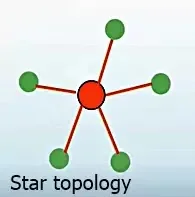
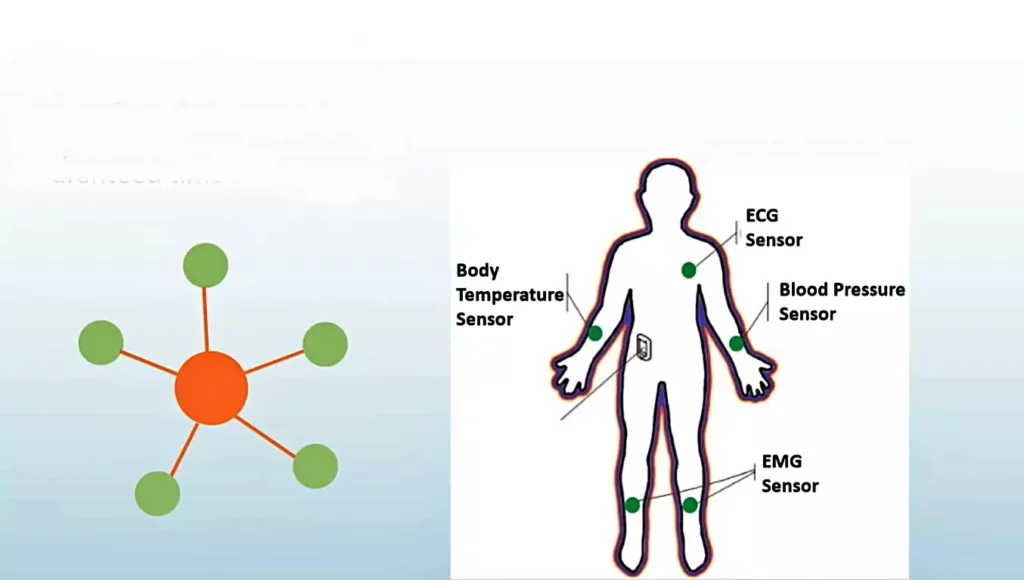
Star topology is the most straightforward and less expensive implementation. In this architecture, there are no routers, and end devices cannot directly communicate with other end devices. The coordinating device is the only point of communication between end devices. One of the drawbacks of this topology is that if the coordinating device fails, the entire network fails. It should be noted that the range is very limited to the scope of the coordinating device itself. This topology is commonly used in health monitoring systems.
Mesh Topology:
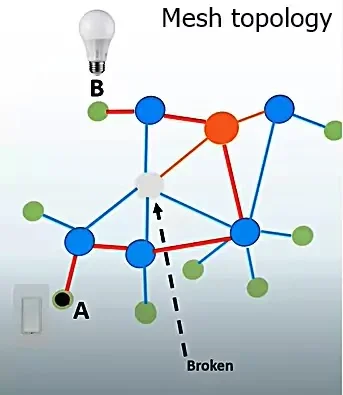
In a mesh topology, every node is connected with neighbouring nodes (except for the end devices). A message hops from one device to another to reach its destination. If a node fails, data can be re-routed, and another best path can be chosen. This self-healing process is one of the advantages of mesh topology. Mesh topology is commonly used in home automation systems.
Tree Topology:

Tree topology is not so different from other mesh topologies, but routers are not interconnected, as shown in the figure. It is known as a cluster tree network because it can expand the network range. This topology is commonly used in building automation systems.
The Advantages and Disadvantages of Zigbee Technology:
Zigbee technology has several advantages over other wireless communication technologies, including low power consumption, low cost, and a high level of security. Zigbee’s self-healing feature is also a significant advantage, as it ensures that the network is always available even if some nodes fail.
However, Zigbee also has some disadvantages. For example, the range of Zigbee devices is limited to a few hundred meters, which may be a problem in more significant buildings. Another disadvantage is that Zigbee networks can be slow, and transmitting data between devices may take a while.
Suggested The Misuse of Artificial Intelligence To Design Biological Weapons
Zigbee Technology: How Devices Communicate with Each Other?
Zigbee technology is a wireless communication protocol primarily used for home automation, industrial control systems, and medical device communication. It uses low-power wireless communication and operates on the IEEE 802.15.4 standard.
But how do devices communicate with each other in a Zigbee network? Let’s find out!
Channel Access Methods: Contention-Based and Contention-Free
The Coordinator is the primary device in the Zigbee network, which is responsible for allocating channels to other devices. There are two methods for channel access in Zigbee technology: The contention-based method and the Contention-free method.
Contention-Free Method: Guaranteed Time Slots
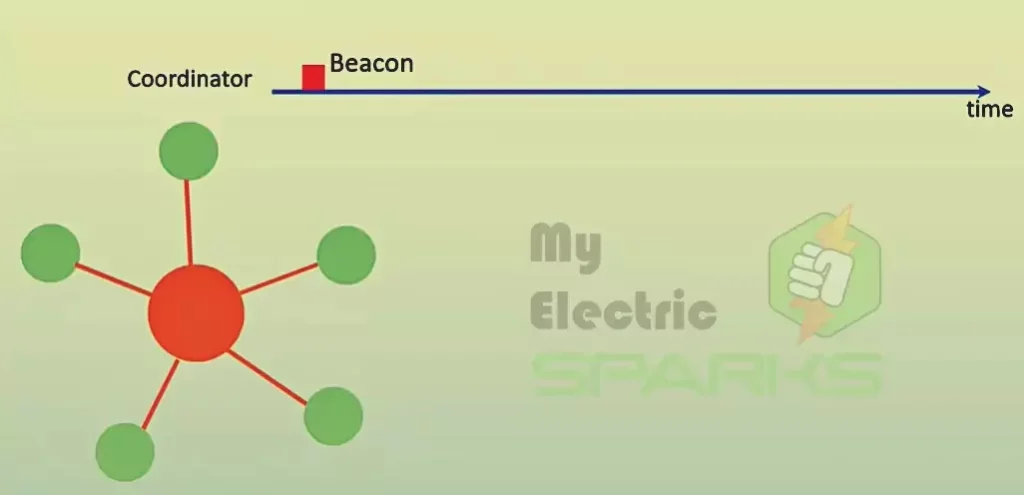
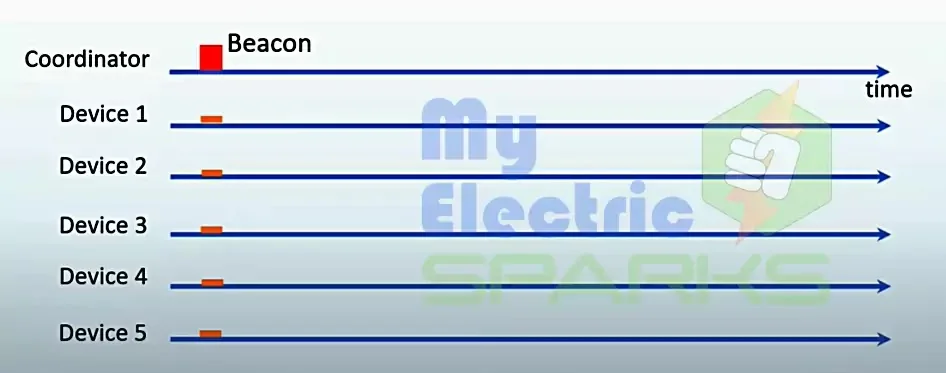
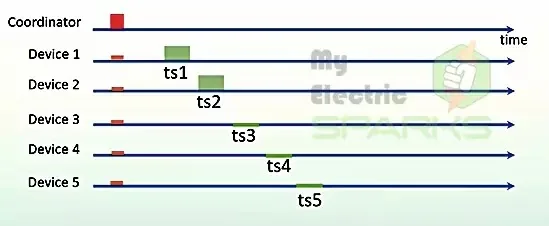
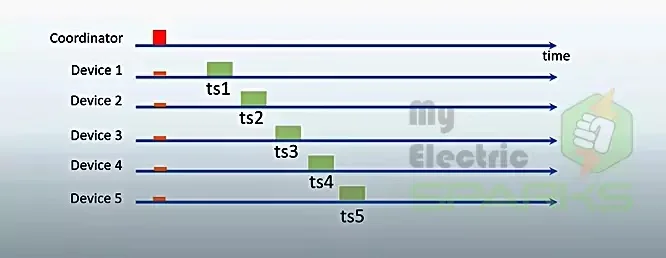
In the contention-free method, the Coordinator dedicates a specific time slot to each device in the network. This is called guaranteed time slots (GTS). The Coordinator ensures that all devices in the network are synchronized by transmitting a message called a Beacon. Once a device receives the Beacon, it adjusts automatically with the Coordinator clock.
Every device waits for its turn to assign and transfer data. Devices not scheduled to share data in a specific time slot will go to sleep mode and wake up only to share data or listen to the Beacon.
Example of Mesh Topology
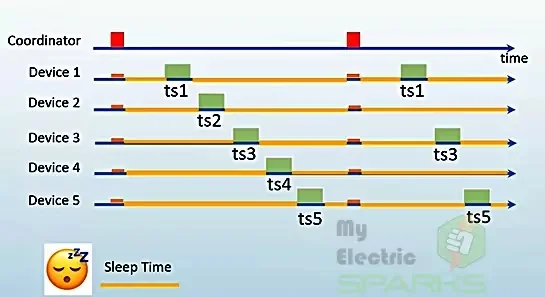
In a Mesh topology, one signal is sent to five devices, including the Coordinator device, to assign the GTS correctly. Devices like end devices will go to sleep mode and only wake up to share data or listen to the Beacon.
Contention-Based Method: Carrier Sense Multiple Access
In the contention-based method, devices do not need to be synchronized. They use a carrier sense multiple access with a collision-avoidance mechanism to detect the channel’s clarity before transmitting data. If the channel is busy, the device waits until it is clear to transmit data.
The Zigbee network also uses a self-healing process. If a node fails, data can be re-routed to choose another best path.
Zigbee Technology: An Overview of Its Architecture
Zigbee Technology is a wireless communication protocol designed for low-power, low-cost wireless devices with long battery life and reliable data transfer. It is widely used in the Internet of Things (IoT) and smart home automation. In this article, we will explore the architecture of Zigbee Technology and its various layers.
Physical Layer: The Foundation
The Physical Layer is the lowest in the Zigbee Technology protocol stack. It controls and activates the radio transceiver, selects the frequency, and monitors the channel. It uses packets for communication data, and each packet consists of a Synchronization Header (SHR), a Physical Header (PHR), and a Physical (PHY) payload. The SHR receives synchronization, the PHR contains data about the frame length, and the PHY payload carries data or commands from the upper layers.
MAC Layer: The Coordinator
The Medium Access Control (MAC) Layer is positioned between the Physical and Network layers. It is responsible for generating Beacons and synchronizing devices in the Beacon-enabled Network. The MAC frame can be a Beacon Frame, Data Frame, Acknowledge Frame, or Command Frame. It comprises a MAC Header, a Variable-length MAC Payload, and a MAC Footer. The MAC Header includes security and addressing information, the MAC Payload contains data or commands, and the MAC Footer carries a 16-bit Frame check sequence for data confirmation.
Network Layer: The Builder
The Network Layer combines the Application layer with the MAC layer. It is responsible for maintaining network configuration and routing. It builds a new network and chooses the network topology. The Network (NWK) frame consists of the Header and Payload. The Header contains network-level addressing and control data, while the NWK Payload contains the Application sub-layer frame.
Application Support Sub Layer: The Assistant
The Application Support Sub Layer implements a set of services through two entities – The application Support Data Entity and the Application Support Management Entity – to the application and network layers. These entities are accessed through their respective Service Access Points (SAP).
Application Layer: The User
The Application Layer is the highest and most used Zigbee Technology protocol stack. It hosts the application that holds user applications and Zigbee device objects. Each device contains up to 240 applications that control and manage the protocol layer. The application objects consist of one profile or program generated by the user or the Zigbee Alliance. This application is responsible for data transmission. The application profile defines each device’s type and function—the Zigbee Device Objects interface between application objects, device profiles, and the Application sub-layer.
suggested:Technological Advances that are Driving Edge Computing Adoption in 2023
Zigbee Technology Revolutionizes Various Industries
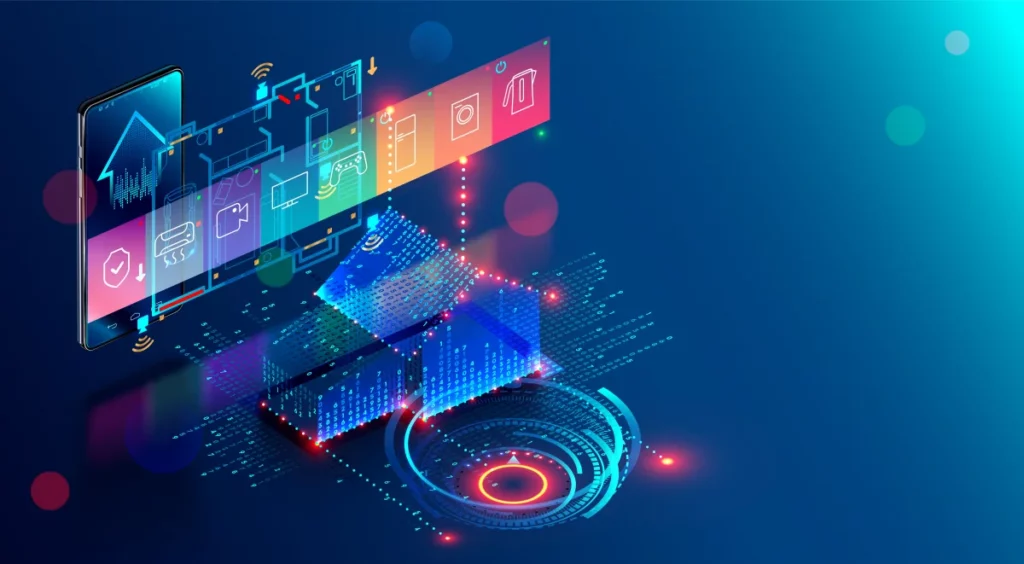
Zigbee Technology has become a game-changer for various industries due to its wide range of applications. This technology is known for its low-power, low-cost, and wireless networking capabilities, making it perfect for IoT devices. In this article, we will discuss the various applications of Zigbee Technology and its impact on different industries.
- Home Automation
One of the most popular applications of Zigbee Technology is Home Automation. With the help of Zigbee-enabled devices, people can control their home appliances from their smartphones, reducing their energy bills. For instance, lights and temperature can be adjusted according to the user’s preference, making it energy-efficient.
- Security Systems
Zigbee technology plays a significant role in Security Systems. CCTV cameras can be easily controlled with the help of Zigbee-enabled devices, ensuring enhanced security and surveillance.
- Meter Reading
Meter Reading has become more accessible with the help of Zigbee technology. The wireless network allows automatic meter readings, eliminating the need for manual readings.
- Lighting Control
Zigbee technology makes Lighting Control easier. For instance, streetlights can be easily monitored and controlled with Zigbee-enabled devices, reducing energy consumption and making it more cost-effective.
- HVAC Systems
Zigbee technology is used in HVAC systems, allowing remote temperature control and reducing energy consumption.
- Electronics
Zigbee technology has made automation possible in the electronics industry. With Zigbee-enabled devices, home appliances can be easily controlled with a smartphone, making daily life more convenient.
- Gaming Consoles
Zigbee technology is also used in gaming consoles, allowing wireless connectivity and a smooth gameplay experience.
- Remote Control Systems
Zigbee technology has enabled remote control systems to have wireless connectivity, making it more convenient for users.
- Industry Automation
Zigbee technology is also used in Industry Automation, allowing automated processes to be scheduled and executed efficiently.
- Asset Management
Zigbee technology is used in Asset Management, providing real-time tracking and monitoring capabilities for various assets.
- Personal Tracking
Zigbee technology plays a vital role in Personal tracking, allowing people to track and monitor their loved ones’ whereabouts, ensuring their safety.
- Livestock Tracking
Livestock tracking has become more accessible with the help of Zigbee technology. Stock exchanges can track livestock efficiently, ensuring their well-being.
- Healthcare
Zigbee technology is used in the healthcare industry, allowing for remote patient health monitoring and timely medical attention and care.
- Hotel Room Automation
Zigbee technology is used in Hotel Room Automation, allowing guests to control room temperature, lighting, and other amenities, ensuring a comfortable stay.
- Fire Extinguishers
Zigbee technology plays an essential role in Fire Extinguishers. With the help of Zigbee-enabled devices, fire extinguishers can be easily monitored and controlled, ensuring enhanced safety and security.
Zigbee technology has revolutionized various industries, providing efficient and cost-effective solutions. With its low-power, low-cost, and wireless networking capabilities, Zigbee Technology has made automation and remote control possible, making daily life more convenient and comfortable. With its wide range of applications and growth potential, Zigbee Technology is expected to play a vital role in the future of IoT devices.
More Stories:
The Beginner’s Guide to Understanding Machine LearningWhat is Generative AI? Technology and Applications Explained
What is artificial intelligence (AI)?: Zigbee Technology: The Next Big Thing in Wireless Communication