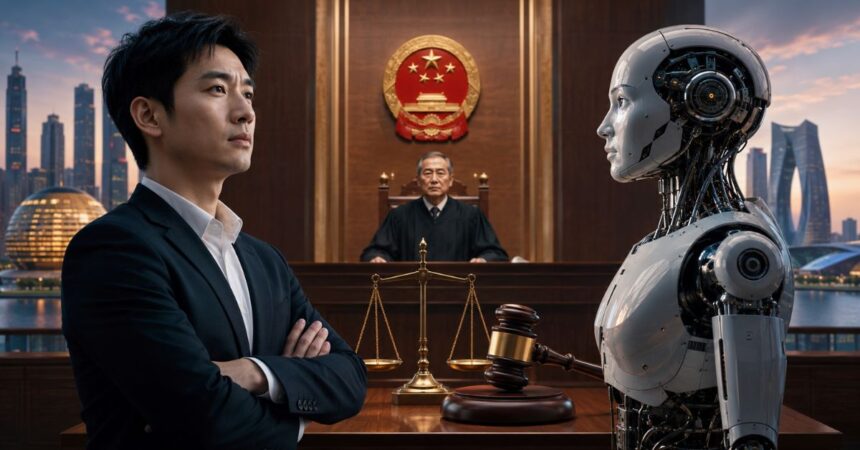
A court in Hangzhou, China, has ruled in favor of a technology worker who was fired after his company said artificial intelligence had made his job unnecessary. The decision has attracted attention because many companies around the world are now using AI to reduce costs and change the way people work.
According to TechSpot reports, the employee, identified only by his surname Zhou, worked at a technology company in Hangzhou, Zhejiang province. Hangzhou is one of China’s growing artificial intelligence hubs and is home to many technology firms. Zhou worked as a quality assurance supervisor. His job was linked to AI large language models. He checked the answers produced by AI systems and helped make sure those answers were accurate, safe, and useful for users.
Before the dispute, Zhou earned about 300,000 yuan a year, equal to around $43,900. Later, the company said its AI systems had improved and that it no longer needed Zhou’s original role. Instead of keeping him in the same position, the company offered him a lower-level job with a major salary cut. Reports said the new position reduced his pay by about 40 percent.
Zhou refused the offer. After that, the company ended his employment contract. It said the role had been affected by AI and that staffing needs had been reduced. Zhou did not accept the company’s decision and took legal action.
The case first went through arbitration, where Zhou won. The company disagreed with that decision and filed a lawsuit in 2025. A district-level court also ruled in Zhou’s favor. The company then appealed, but the Hangzhou Intermediate People’s Court supported the earlier decisions and said the dismissal was unlawful.
The court said the company’s reason for ending Zhou’s contract did not meet legal requirements. In its published article, the court said, “The termination grounds cited by the company did not fall under negative circumstances such as business downsizing or operational difficulties, nor did they meet the legal condition that made it impossible to continue the employment contract.”
This statement is important because it shows that the court did not accept AI replacement as a simple excuse for firing a worker. The court said the company had not proved that it was facing serious business problems, real downsizing, or an unavoidable situation that made Zhou’s contract impossible to continue.
The court also said the new job offered to Zhou was not reasonable because it came with a large pay cut. A reassignment can be part of business changes, but it must be fair. Offering a lower-level job with much less pay was not seen as a proper solution in this case.
Legal experts say the ruling sends a strong message to companies using artificial intelligence. It does not mean companies in China cannot use AI. It also does not mean every worker replaced by AI will automatically win a case. However, it does mean that companies must follow proper legal steps before removing workers. They may need to offer reasonable training, fair reassignment, and proper negotiation.
Zhejiang lawyer Wang Xuyang was not connected to the case. He told the state-run news agency Xinhua that AI adoption does not automatically justify ending a labor contract just to reduce costs. His view reflects a growing legal concern that businesses should not pass the full cost of technological change onto workers.
The Hangzhou case is also part of a wider debate in China. In another case in Beijing, a company dismissed a data mapping worker after moving from manual map data work to AI-based systems. That worker also won through arbitration. The arbitration panel said the company’s move to AI was a business choice, not an uncontrollable event. It ruled that the company could not simply shift the risk and cost of AI transformation to the employee.
These cases show how Chinese labor authorities and courts are starting to respond to artificial intelligence in the workplace. They are making a difference between a real emergency that affects a company and a planned business decision to adopt new technology. If a company chooses AI to improve efficiency, the courts may expect it to also protect workers affected by that choice.
The ruling comes at a time when artificial intelligence is reshaping jobs around the world. Companies now use AI tools in many areas. These areas include customer service, content writing, software development, data analysis, translation, design, and office work. Many companies say AI helps them work faster and save money. But workers fear that employers may also use AI to cut jobs, reduce salaries, and weaken job security.
The Hangzhou court’s decision offers a different message. It suggests that technological growth should not come at the unfair expense of employees. If a company benefits from AI, it must also take responsibility for the workers whose jobs that technology changes.
For workers, the case gives hope that people can still protect labor rights in the AI era. For companies, it is a warning that using artificial intelligence does not remove their legal duties. Businesses may still need to provide fair options, reasonable pay, and proper compensation when they restructure jobs.
China is strongly supporting AI development, but the ruling shows that the country is also trying to manage the social impact of automation. The goal appears to be clear: AI can improve business, but it should not become a shortcut for unfair dismissals.