Chinese scientists have carried out a bold experiment as they have taken the DNA of the tiny creature called a tardigrade, also known as a water bear, and placed it into human embryonic stem cells. Their claim is that this may one day make human beings resistant to deadly radiation.
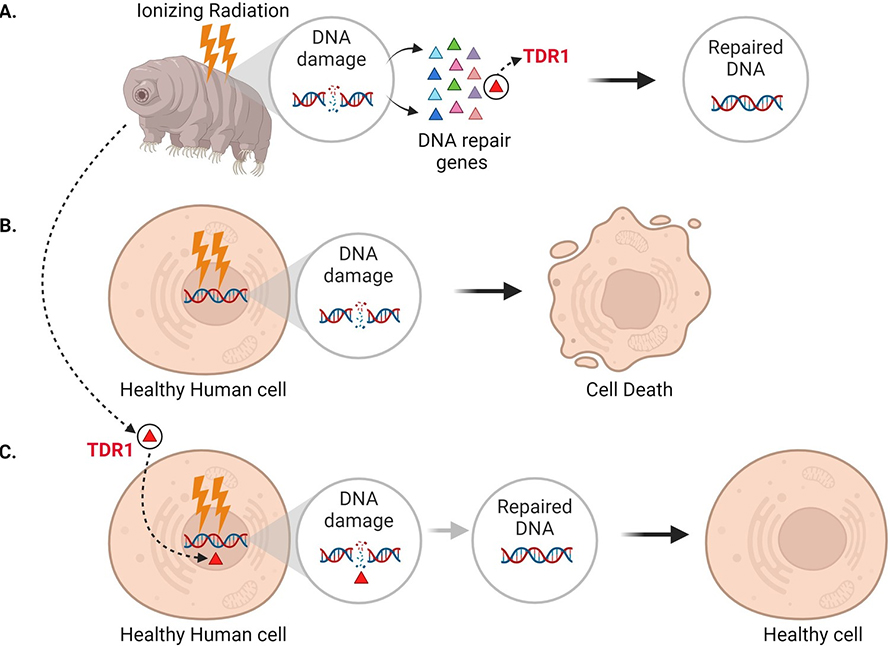
The team used CRISPR, a powerful gene-editing tool, to move the tardigrade’s special genes into human cells. These genes produce protective proteins that help the water bear survive the harshest conditions.
After the change, the modified human cells were tested against X-ray radiation. The cells that carried tardigrade DNA not only survived the normally lethal radiation, they also kept growing and multiplying as if nothing had happened.
One researcher, who did not want to give his name because of the sensitivity of the project, told the South China Morning Post, “This is amazing, considering the big difference between the water bear and a human. Yet the cells not only survived lethal radiation but even grew faster.”
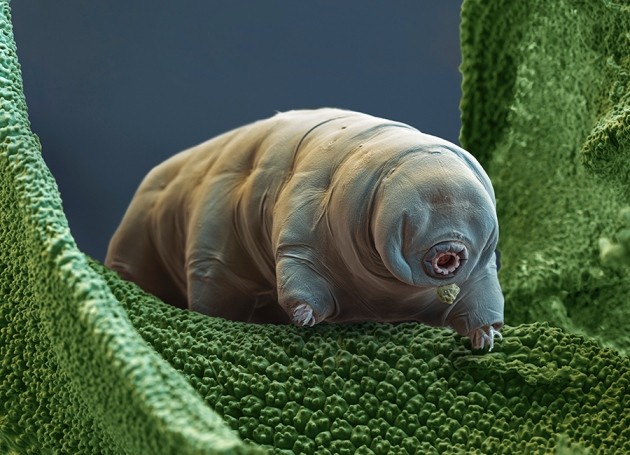
Tardigrades are famous for their toughness. They are less than a millimeter long but can live through boiling water, freezing cold, and even the vacuum of space. Some have survived being sent to the Moon and brought back to Earth.
They can dry out completely and then come back to life years later when water is added. Because of this, many scientists call them the toughest creatures on Earth. Now, Chinese military researchers believe these powerful genes can be used to make humans harder to kill.
The work was published first in Chinese in Military Medical Sciences and then reported internationally. According to the report, scientists from the Academy of Military Sciences in Beijing believe inserting water bear DNA into human cells could lead to humans who can withstand nuclear fallout or even survive new kinds of diseases. The researchers called it an “unprecedented experiment,” and they believe this is only the beginning.
The study explained how the CRISPR/Cas9 tool was used to copy the tardigrade’s protective gene and place it into human embryonic stem cells grown in a lab. Because these cells were artificially cultured, the team argued the work was legal under Chinese regulations.
After testing, the cells lived through extreme radiation exposure that would normally destroy human tissue. Even the scientists found that the modified cells showed stronger growth. “The expression does not damage the vitality of cells, but can promote cell proliferation to a certain extent,” the paper said.
This finding has led to both excitement and fear. On one side, many experts say the experiment could be the start of something incredible. It may help protect astronauts from dangerous space radiation on future missions to Mars. It might also lead to better cancer treatments, since radiation is often used to fight tumors but damages healthy cells. If tardigrade genes can make human cells tougher, patients may suffer fewer side effects.
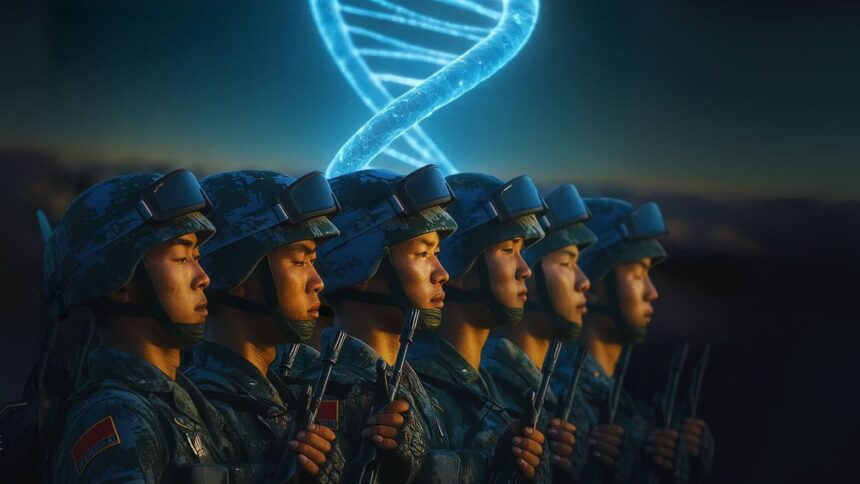
On the other side, mixing genes between species can bring unknown risks. No one can be sure what long-term effects might come if these altered cells are placed in a real human body. There are also fears about the military side of this research. If such experiments are used to create stronger soldiers who can survive nuclear war, the world could face serious moral and security problems.
Professor Li, a genetic expert not involved in the study, explained in a local interview “The science is extraordinary, but the questions are even greater. Should we allow such experiments to go forward? What if one mistake creates more danger than benefit?”
This is not the first time China has faced global debate over genetic research. In 2018, a Chinese scientist shocked the world by announcing he had created the first gene-edited babies. That experiment was widely condemned and led to stricter rules. The tardigrade DNA study is now raising similar concerns.
For now, the work remains only in a laboratory setting. No humans have been directly altered. But the study has already proven that tardigrade genes can live and work inside human cells without stopping them from growing.
One scientist in Beijing summed up the dilemma in simple words “We can now give human cells the power of the water bear. But should we?”