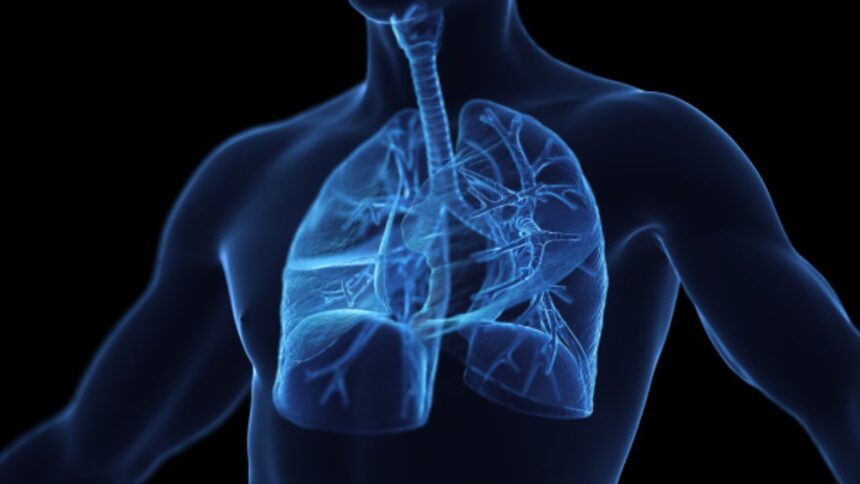
Doctors in South Korea successfully transplanted a 3D-printed windpipe into a woman in her 50s, marking the world’s first successful procedure of its kind. The woman’s body later began to grow a real living trachea around the printed implant.
The patient had lost part of her windpipe during surgery for thyroid cancer. Breathing and speaking had become difficult, and normal surgery could not rebuild the damaged organ. To save her life, doctors decided to use a 3D-printed organ made to perfectly match her own body. The implant was designed using CT and MRI scans, ensuring it fit precisely into her airway.
The printed trachea measured about five centimeters long and was built using a biodegradable material called polycaprolactone (PCL) mixed with bio-ink containing stem cells and cartilage cells. This unique combination allowed the implant to become more than just an artificial tube. It slowly turned into a living, healing structure inside her body.
Doctors explained that six months after the operation, the implant was healing naturally. “We felt surprised to see new blood vessels forming, showing that the patient’s body had accepted the structure as its own,” one of the surgeons said. The most remarkable part was that the woman did not need any immunosuppressant drugs, which doctors normally use to stop the body from rejecting transplanted organs.
Over the next few years, the polymer material would safely dissolve, while the woman’s own tissue would continue to grow, eventually replacing the printed trachea completely. According to the hospital, the full regeneration process could take about five years.

The success of this surgery resulted from collaboration between three partners. These were the Catholic University of Korea, Gachon University, and the biomedical engineering company T&R Biofab. T&R Biofab produced the high-precision 3D printer. The company designed the printer specifically for medical use. It could print hollow tubular structures such as windpipes and blood vessels.
The entire process took less than two weeks to complete. After they finalized the design, they printed the ear in a controlled lab environment. The transplant surgery itself lasted only half a day. This marked a major improvement compared to the months of preparation and testing that traditional organ transplants require.
Dr. Paulo Marinho, the head of scientific strategy at T&R Biofab, said, “While it is too early to say this is a complete solution to the global shortage of donor organs, it is a step toward bridging that gap,” he told BBC Science Focus.
He explained that this success showed how doctors could use 3D bioprinting to create customized organs. These organs not only fit the patient but also become part of their own biology. “This is a clear example of how technology and medicine are coming together to create living solutions,” he added.
The printed trachea used stem cells taken from discarded nasal tissue from minor surgeries to treat nasal congestion. Doctors chose these cells because they could differentiate into various tissue types, including cartilage and mucosal lining. The result was an implant that behaved like a natural windpipe, flexible yet strong enough to support normal breathing.
Before this breakthrough, patients who lost part of their trachea had very few options. This loss often resulted from cancer, trauma, or congenital problems. Normal treatments often used donor tissue or permanent synthetic tubes. These carried a high risk of infection, rejection, and long-term complications. This new bioprinted solution changed that completely. It showed that the body could regenerate its own organ using its own cells.
Researchers said they built this project on almost 20 years of scientific development. It began with lab experiments and animal trials as early as 2004. The team spent years perfecting the materials and structure of the printed organ. They wanted to make sure it could safely support tissue growth once implanted in a human.
Although the company designed this specific 3D printer only for Seoul St. Mary’s Hospital, it said it hoped to expand production. As a result, other hospitals could use similar technology in the near future.
The hospital confirmed that the patient was recovering well. Her windpipe was functioning normally. The case was under review for publication in a peer-reviewed medical journal. Researchers around the world were already calling it one of the most important advances in bioengineering this decade.
Dr. Marinho also mentioned T&R Biofab’s earlier research. This research, published in Nature Communications in 2019, had already shown the potential of 3D-printed heart tissue. It could repair damaged hearts in animal studies. “What we are seeing now with this patient is the next logical step,” he said.
The world’s first 3D-printed windpipe transplant showed that science no longer limited itself to repairing organs. It could now grow them.