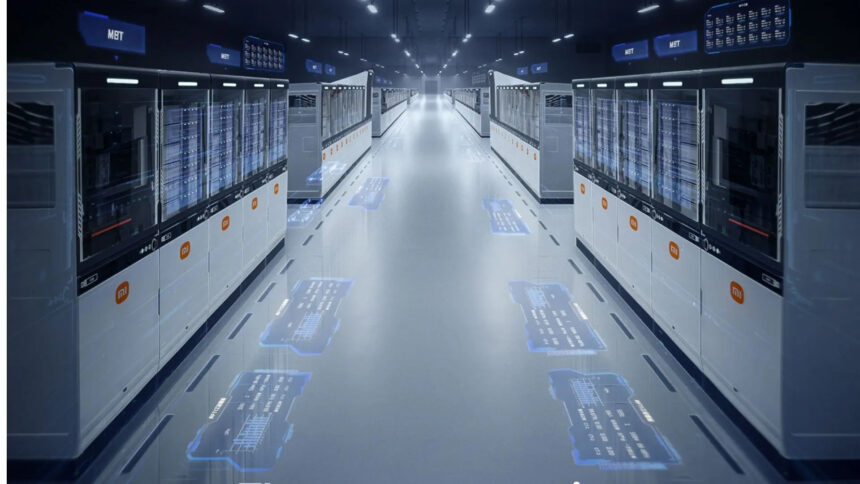
Xiaomi has launched a fully automated smartphone factory in Beijing, marking a significant advancement in smart manufacturing. The facility, often described as a “dark factory,” operates without human workers on production lines and relies entirely on robotics, artificial intelligence, and machine vision to manufacture devices with high speed and precision.
Located in the Changping district, the factory spans approximately 80,000 square meters and represents an evolution of Xiaomi’s earlier smart factory in Yizhuang. The new facility significantly expands automation capabilities and aligns with the company’s broader manufacturing strategy focused on efficiency and scalability.
According to Xiaomi CEO Lei Jun, the factory has 11 production lines, with all key processes fully automated. The company has developed its own manufacturing software system to manage operations and ensure consistent production quality across devices.
The facility is currently producing foldable smartphones, including the MIX Fold 4 and MIX Flip. At maximum capacity, the factory can produce a smartphone roughly every three seconds. Operating continuously throughout the year, Xiaomi estimates annual production could reach up to 10 million units.
Let me know in the comments what you're most curious about this Xiaomi Smart Factory. pic.twitter.com/5TU5ts9aMS
— Lei Jun (@leijun) July 8, 2024Unlike traditional manufacturing plants, there are no assembly workers on the production floor. Robots handle component placement, soldering, inspection, and packaging. A limited number of personnel oversee operations from a centralised control room, monitoring performance data and system outputs in real time.
The factory maintains a highly controlled, clean environment using advanced dust removal systems at a micron level, similar to conditions found in medical-grade facilities. This helps protect sensitive components and reduce production defects, improving overall product reliability.
At the core of the operation is Xiaomi’s self-developed intelligent manufacturing platform. The system connects thousands of sensors that monitor variables such as temperature, pressure, and equipment performance. Using artificial intelligence, the platform can automatically detect issues, optimise processes, and maintain consistent production quality.
Step into the heart of our factory, the "War Room". Our Xiaomi Hyper IMP (Intelligent Manufacturing Platform) is the brain of the operations, proactively solving issues and optimizing production.😎 pic.twitter.com/6ZWhOm5wle
— Lei Jun (@leijun) July 9, 2024Quality control is also fully automated. High-resolution imaging systems and AI-based inspection tools scan each device for defects. Precision measurement systems ensure accuracy at the millimetre level, supporting uniform standards across all products.
Industry experts note that the adoption of lights-out manufacturing is increasing globally as companies seek to reduce operational costs and improve efficiency. Automated factories eliminate the need for lighting, reduce dependency on large labour forces, and enable uninterrupted production cycles.
Xiaomi Beijing facility highlights the growing role of AI-driven automation in electronics manufacturing.
It signals a shift toward advanced self-optimizing production environments.