Rosatom, the Russian nuclear research agency, has developed a new plasma electric rocket engine that could make space travel much faster. Scientists say this engine could take astronauts to Mars in just one to two months. This is much quicker than the nine to twelve months it takes with regular chemical rockets. The new technology could help protect astronauts from the dangers of long space missions and make space travel easier and safer.
Traditional rockets burn fuel to create thrust, but Rosatom’s plasma engine works differently. It uses a magnetic plasma accelerator to speed up charged particles, creating thrust without the need for combustion. This method allows the engine to push particles at speeds of up to 100 kilometres per second (62 miles per second), making it much more efficient than traditional rockets.
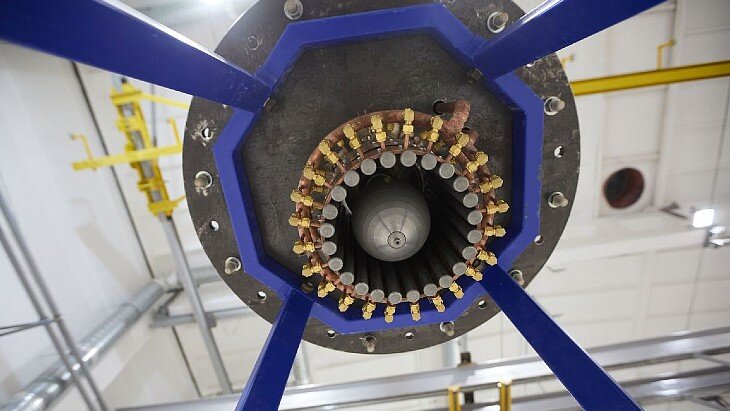
The key to this technology is the plasma rocket motor, which is a type of electric propulsion. It has two electrodes that generate a high voltage. Charged particles pass between these electrodes, and the energy they receive helps them accelerate and exit the engine, creating thrust. Because this process does not require fuel to burn, it is much more energy-efficient and does not produce as much heat as chemical rockets.
ALSO READ: China’s Deep Blue Aerospace Launches Unforgettable $210,000 Space Flights for 12-minute
Egor Biriulin, a junior researcher at Rosatom’s Troitsk Institute, explained that the plasma engine works by using a high-voltage system to push charged particles. This process is different from traditional rocket engines, which rely on burning fuel to produce thrust. The new engine uses electricity to move the particles, making it more efficient and better suited for long missions in space.
One of the biggest problems with space travel is how long it takes to reach distant planets. Right now, a trip to Mars can take nearly a year, which exposes astronauts to harmful cosmic radiation for long periods. It also puts them under extreme mental and physical stress. Rosatom’s plasma engine could reduce the time needed for a Mars trip to just 30 to 60 days. This would not only make space travel faster but also much safer for astronauts.
The new plasma engine is designed to work at 300 kilowatts and can produce a thrust of 6 Newtons. While this might seem low compared to traditional rockets, the constant acceleration of the plasma engine allows a spacecraft to reach much higher speeds over time. This could make long-distance space missions much more practical.
Scientists at Rosatom have already built a laboratory prototype of the plasma engine. It has been tested for over 2,400 hours, which is long enough to power a full Mars mission. The engine is now undergoing further tests at the Troitsk Institute in Moscow, where researchers are refining its design and performance.
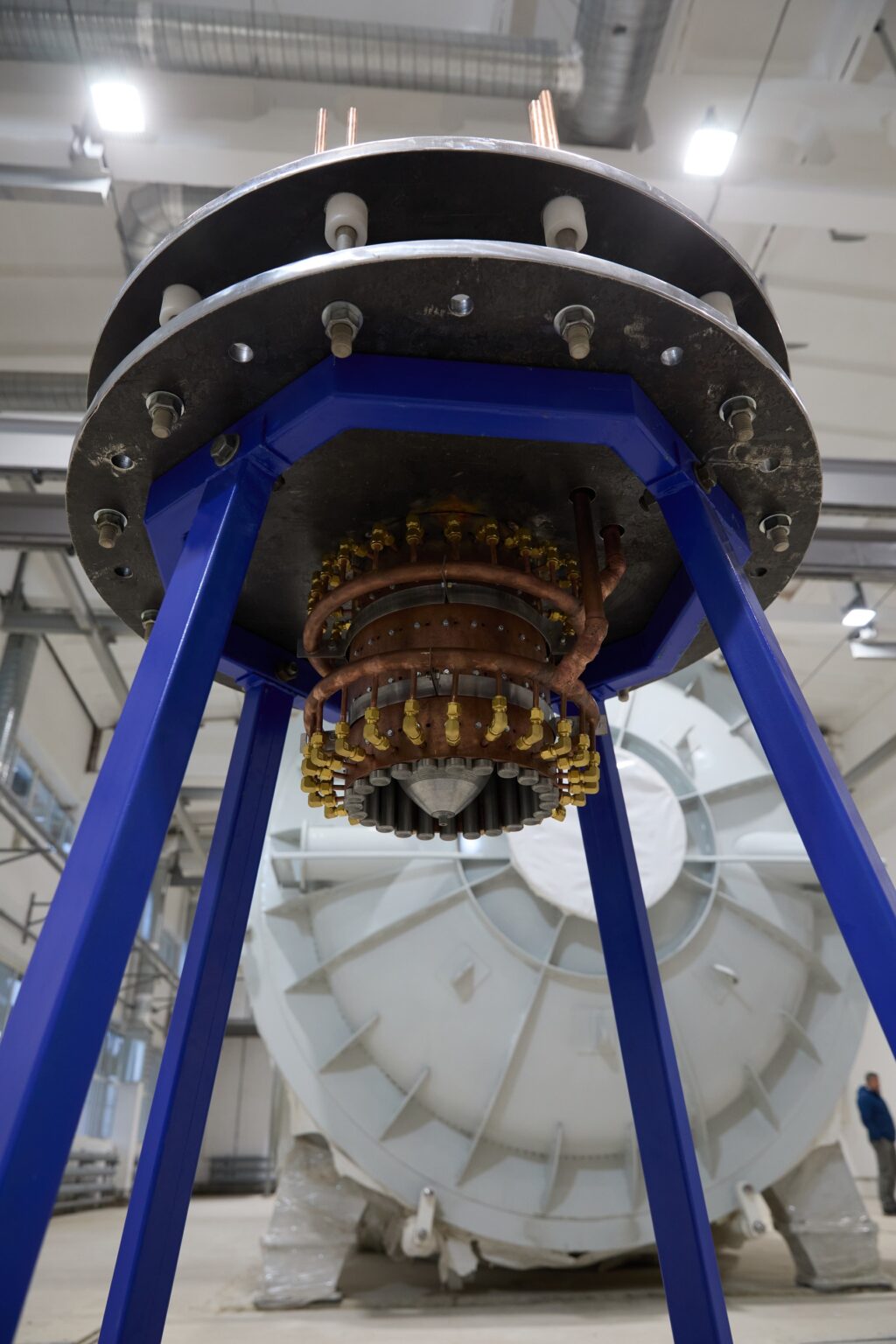
As reported by World Nuclear News, To test the engine, Rosatom has created a special experimental chamber that simulates space conditions. This chamber is 4 meters in diameter and 14 meters long. It is equipped with advanced sensors, vacuum systems, and cooling mechanisms to measure how well the engine works in space-like conditions. These tests will help scientists understand how the engine performs over long periods and whether it can be used for real missions.
ALSO READ: Chinese Astronauts Turn Carbon Dioxide into Oxygen and Rocket Fuel in Space
Rosatom aims to have a flight-ready version of the plasma engine by 2030. The spacecraft carrying this engine will still need a traditional rocket to launch into space, but once it reaches orbit, the plasma engine will take over and push the spacecraft toward its destination. This system could make space travel much more efficient and reduce the cost of missions to Mars and beyond.
The plasma engine could also be used in space tugs, which are spacecraft designed to transport cargo between planets. This would reduce the need for chemical rockets and make interplanetary transport more sustainable.
Although Rosatom’s plasma engine is a breakthrough, scientists still need to confirm its performance through further testing. Other researchers around the world are also working on new propulsion technologies, such as water-based thrusters and laser-driven lightsails. However, most of these ideas are still in early development, while Rosatom’s plasma engine has already reached the testing phase.
If Rosatom’s plasma propulsion system is successful, it could completely change the future of space exploration. The ability to reach Mars in just a couple of months would make human missions more practical and open the door for deep-space travel.