Indian health authorities face a critical crisis after confirming five cases of Nipah virus in West Bengal. Nearly 100 people remain under quarantine as officials intensify containment efforts. The outbreak, centered near Kolkata, has triggered high-alert protocols across the region.
- Quick Facts About This Outbreak
- How the Outbreak Began
- Understanding Nipah Virus Infection
- Transmission Routes
- Early Signs: Flu-Like Symptoms
- Severe Stage: Encephalitis (Brain Inflammation)
- Mortality Rate: Among the World’s Deadliest
- No Cure Yet: Treatment Options Are Limited
- Nipah’s History: From Malaysia to India
- Emergency Response: What Health Authorities Are Doing
- Global Health Perspective: Should the World Be Concerned?
- Protection Strategies: What Travelers and Locals Should Know
- Frequently Asked Questions
- Q: Can Nipah spread like COVID-19?
- Q: Is there a vaccine?
- Q: Will this outbreak reach the United States?
- Q: What’s the recovery rate?
- Q: How long does the Nipah virus survive outside the human body?
- Q: Are children more vulnerable to Nipah virus infection?
- Q: Can cooked food transmit Nipah virus?
- Q: What should hospitals do to prevent Nipah outbreaks?
- Q: Is there any early warning system for Nipah outbreaks?
- Final Thoughts: Why This Matters
This virus poses an extreme threat: it carries a 40-75% fatality rate and has no approved vaccine or cure. Early symptoms mimic common flu but can rapidly progress to fatal brain inflammation.
Quick Facts About This Outbreak
- Confirmed cases: 5 (includes 2 nurses, 1 doctor, 1 nurse, healthcare worker)
- Location: Barasat, North 24 Parganas district, near Kolkata
- Source: Private hospital initially triggered outbreak
- Contacts traced: Nearly 100 people under quarantine
- Critical case: One infected nurse in coma with severe respiratory illness
How the Outbreak Began
Health officials suspect the virus originated from a patient who died before being tested for Nipah infection. This individual had severe respiratory illness, a hallmark of advanced Nipah disease. The patient’s contact with hospital staff exposed multiple healthcare workers.
Three new cases were detected this week, all among hospital workers. The first two confirmed patients were nurses working at the same private hospital in Barasat. Their symptoms started with fever and difficulty breathing, then progressed rapidly.
Healthcare settings amplify transmission risk because medical staff provide close care without always recognizing the threat. This healthcare worker cluster is why officials declared a health emergency immediately.
Understanding Nipah Virus Infection
Nipah virus is a zoonotic diseaseit spreads from animals to humans. Fruit bats (flying foxes) carry the virus naturally and rarely develop symptoms themselves. Humans contract it through direct bat contact, contaminated food, or close contact with infected people.
Transmission Routes
- Direct contact with infected bats
- Contaminated food (fruit, raw date palm sap)
- Close contact with infected person’s bodily fluids
- Secondary spread in hospitals (nosocomial transmission)
Early Signs: Flu-Like Symptoms
Initial symptoms appear 4-14 days after exposure (rarely up to 45 days). Early stage resembles common flu, which delays diagnosis:
- Fever (sudden onset)
- Severe headache
- Muscle pain (myalgia)
- Sore throat
- Cough and difficulty breathing
Severe Stage: Encephalitis (Brain Inflammation)
Within 3-21 days, severe cases develop encephalitis. This stage carries the highest mortality rate. Symptoms escalate dangerously:
- Drowsiness and confusion
- Altered consciousness
- Seizures
- Rapid loss of consciousness
- Coma (within 24-48 hours in critical cases)
The infected nurse in this outbreak developed severe fever and respiratory distress. She was moved to intensive care (ICCU) as her condition deteriorated rapidly.
Mortality Rate: Among the World’s Deadliest
The World Health Organization reports case fatality rates between 40-75%, depending on virus strain and healthcare access. Some outbreaks have reached a 91% fatality rate. For comparison, COVID-19’s global rate was 1-2%.
Survivors often face long-term complications: recurrent seizures, persistent fatigue, personality changes, and in rare cases, virus reactivation months or years later.
No Cure Yet: Treatment Options Are Limited
Currently, no approved drugs or vaccines exist for Nipah virus. Treatment focuses entirely on supportive caremanaging symptoms while the patient’s immune system fights the virus.
Standard Care Protocol
- Rest and hydration
- Respiratory support (mechanical ventilation for severe cases)
- Intensive neurological monitoring
- Seizure management
- Pain relief
Experimental Treatments in Development
Several experimental approaches show promise in laboratory settings but remain in early testing:
- Monoclonal antibodies
- Fusion inhibitors
- Novel antiviral drugs
Development of these treatments requires sustained public funding and international collaboration, resources that were previously limited because outbreaks were sporadic.
Nipah’s History: From Malaysia to India
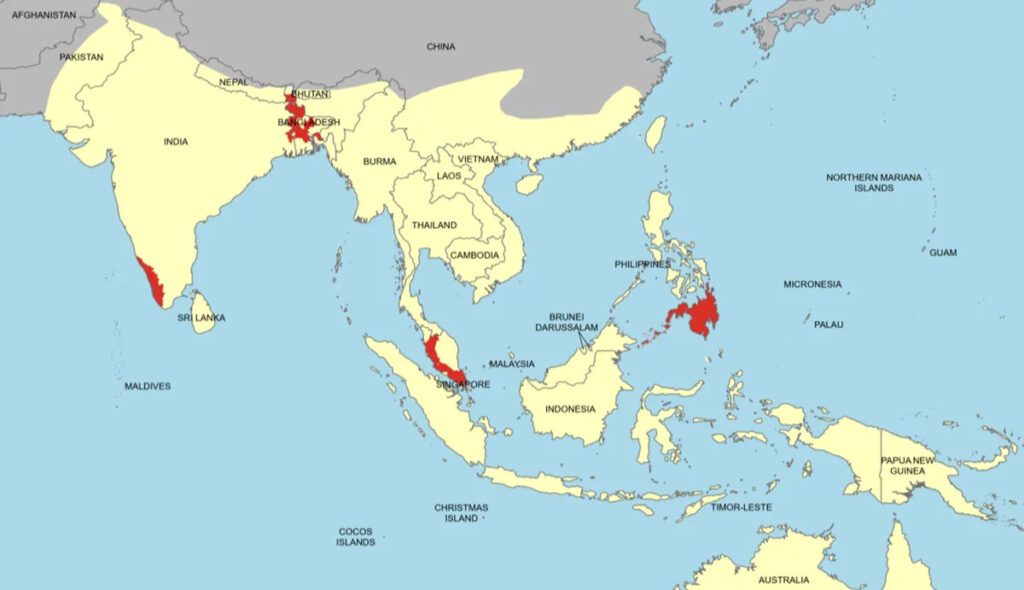
Nipah virus was first identified in 1998 among pig farmers in Malaysia and Singapore. That outbreak infected 265 people with 105 deaths. Since then, sporadic cases appeared across Asia:
| Year | Location | Cases/Deaths |
| 1998-1999 | Malaysia & Singapore | 265 cases / 105 deaths |
| 2001 | West Bengal, India | Multiple cases reported |
| 2018-2025 | Kerala, India (recurrent) | Dozens of deaths |
India’s experience is critical: the country has managed multiple outbreaks successfully through rapid detection, strict isolation, and contact tracing. The current West Bengal response follows proven protocols.
Emergency Response: What Health Authorities Are Doing
Containment Measures Activated
- Patient isolation: All confirmed cases moved to specialized infectious diseases hospital in eastern Kolkata
- Contact tracing: Nearly 100 close contacts identified, monitored, and quarantined
- Hospital protocols: Enhanced infection control measures at private facility where outbreak started
- Lab testing: Rapid confirmation through RT-PCR and ELISA testing
- Regional alert: Neighboring states and countries notified for enhanced surveillance
Officials emphasized that early detection, strict isolation, and public cooperation remain critical to controlling the outbreak. The specialized infectious diseases hospital ensures expert-trained staff handle highly infectious cases in proper isolation settings.
Global Health Perspective: Should the World Be Concerned?
The World Health Organization classifies Nipah as a priority pathogen because of its pandemic potential. However, several factors limit global spread:
- Limited human-to-human transmission: The virus spreads person-to-person only through close contact with bodily fluids
- Geographic distribution: Fruit bats carrying Nipah are confined to Asia, Pacific region, and Australia; they are not present in Americas or Europe
- No documented US cases: The virus has never been recorded in North America despite international travel
- Travel controls: Asian airports and borders have implemented screening measures
Expert consensus: Global risk is currently assessed as low. However, scientists warn that human expansion into wildlife habitats increases bat-to-human spillover frequency. Climate change and deforestation could shift fruit bat ranges and raise future outbreak risk.
Protection Strategies: What Travelers and Locals Should Know
For People in Affected Areas
- Avoid bat contact entirely
- Avoid areas where bats roost
- Don’t consume raw date palm sap or fruit that may be bat-contaminated
- Wash hands frequently with soap and water
- Avoid contact with bodily fluids of suspected Nipah patients
For International Travelers
- Avoid travel to West Bengal if possible during the outbreak
- Monitor flight arrivals from affected areas
- Report symptoms to health authorities within 14 days of India travel
- No specific vaccine or treatment is available; prevention is paramount
Frequently Asked Questions
Q: Can Nipah spread like COVID-19?
A: No. Nipah requires direct contact with infected person’s bodily fluids. It doesn’t spread through respiratory droplets the way COVID-19 does. This limits transmission significantly.
Q: Is there a vaccine?
A: Not yet. Japan developed a vaccine candidate entering human trials in April 2026. However, no approved vaccine currently protects against Nipah.
Q: Will this outbreak reach the United States?
A: Very unlikely. Fruit bats carrying Nipah don’t exist in North America. The virus has never documented in the US despite decades of international travel. If an infected traveler arrived, human-to-human transmission in developed countries would be limited due to advanced infection control.
Q: What’s the recovery rate?
A: Approximately 25-60% survive, depending on virus strain and healthcare quality. In this outbreak, survivors often face long-term neurological complications, such as seizures, fatigue, personality changes, or even virus reactivation years later.
Q: How long does the Nipah virus survive outside the human body?
A: The Nipah virus does not survive long in open environments. It is fragile and can be destroyed by heat, sunlight, and common disinfectants. However, it can remain active in bodily fluids for a short time, which is why close contact transmission is risky.
Q: Are children more vulnerable to Nipah virus infection?
A: People of all ages can be infected. However, children, elderly individuals, and those with weak immune systems may face a higher risk of severe complications if infected.
Q: Can cooked food transmit Nipah virus?
A: Properly cooked food is considered safe. The virus is mainly transmitted through raw or contaminated food, especially fruits or raw date palm sap exposed to infected bats.
Q: What should hospitals do to prevent Nipah outbreaks?
A: Hospitals must follow strict infection control protocols, including using personal protective equipment (PPE), isolating suspected patients, disinfecting surfaces, and training staff to recognize early symptoms quickly.
Q: Is there any early warning system for Nipah outbreaks?
A: Yes, health authorities and organizations like the World Health Organization monitor zoonotic diseases globally. Surveillance systems track unusual illness clusters, especially in regions where fruit bats are present, to detect outbreaks early.
Final Thoughts: Why This Matters
The West Bengal Nipah outbreak represents a genuine public health crisis. Five confirmed cases may seem small, but this virus kills 40-75% of infected people. No approved cure exists. The fact that healthcare workers themselves became infected shows the virus overcomes standard precautions.
However, India has successfully managed multiple Nipah outbreaks. Early detection, rapid isolation, and contact tracing work. The specialized hospital isolation ensures patients receive expert neurological and respiratory care. For the global community, this serves as a reminder: zoonotic viruses jumping from animals to humans are our new reality. Climate change, deforestation, and human expansion into wildlife habitats increase spillover frequency. Investment in vaccines, treatments, and pandemic preparedness today prevents catastrophes tomorrow.