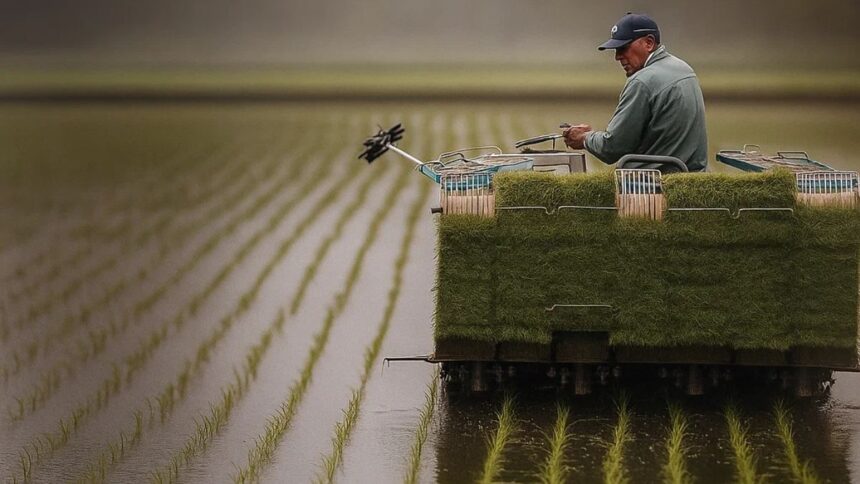
Chinese scientists have achieved a breakthrough in developing a type of rice that can grow in salty water, commonly called “seawater rice.” This discovery has the potential to transform millions of hectares of land that were once thought to be useless into fertile fields, helping secure the food supply for China and possibly the world.
The project was first started by Yuan Longping, known across the country as the “Father of Hybrid Rice.” Today, it is being led by the Qingdao Saline-Alkali Tolerant Rice Research Centre in Shandong province. For decades, scientists have tried to grow rice in salt-rich conditions, but the results were poor. Now, several new types of rice have shown that they can survive and even produce strong harvests.
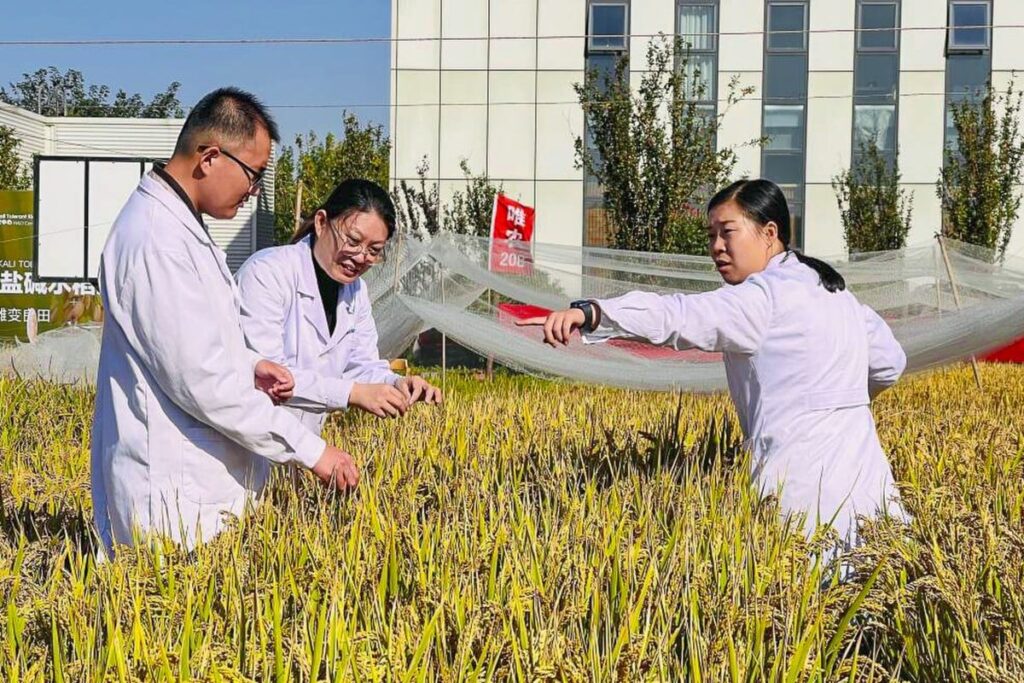
The experimental rice fields were built near the Yellow Sea in Qingdao. Researchers planted more than 200 varieties of rice to see which ones could grow best. Seawater was pumped from the coast, diluted, and then guided into the paddies.
The team expected to harvest only about 4.5 tons of rice per hectare. But the results shocked them. In some test areas, the crop produced between 6.5 and 9.3 tons per hectare, and in later trials yields rose even higher, reaching 10 tons per hectare.
Professor Liu Shiping from Yangzhou University, who is part of the project, said in an interview with Xinhua “The test results greatly exceeded our expectations.”
These findings prove that rice can thrive in places once seen as hopeless for farming. Across China, nearly one million square kilometers of land cannot grow food because of high salt levels. If just ten percent of that land were used for seawater rice, it could produce about 50 million tons of grain, enough to feed 200 million people.
By 2024, China had already planted over 400,000 hectares of seawater rice. The goal for this year is to expand to 667,000 hectares, a massive increase that could reshape the nation’s food production. Scientists believe the new crop could boost rice output by nearly 20 percent, giving China a stronger safety net at a time when global food supplies face uncertainty.
The government has supported this research, but only now has it reached commercial levels. This development comes at a time when food security is becoming a national priority because of climate change, population growth, and rising international tensions.
The achievement also fulfills the lifelong dream of Yuan Longping, who spent decades trying to breed rice for extreme environments. Before his passing, Yuan often explained that farmers would only plant salt-tolerant rice if the yields were high enough to make money.
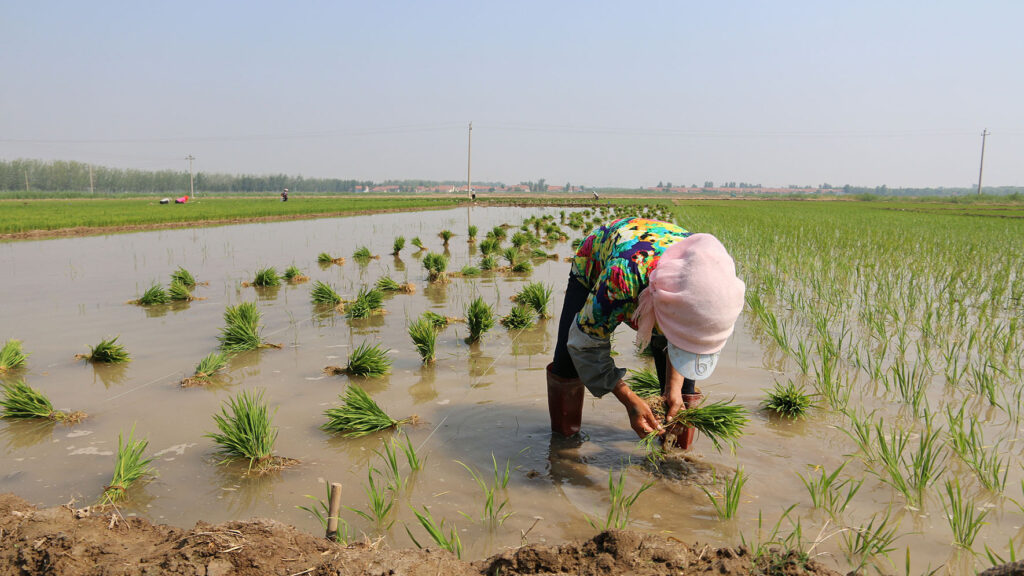
“If a farmer tries to grow some types of saline-tolerant rice now, they most likely will get 1,500 kilograms per hectare. That is just not profitable and not even worth the effort,” Yuan said in one interview. “Farmers will have an incentive to grow the rice if we can double the yield.”
The rice is being sold under the brand name “Yuan Mi,” a tribute to the scientists who developed it. It is much more expensive than regular rice, nearly eight times the usual price. Yet, this has not stopped people from buying it. Consumers have praised its unique taste and texture, while experts say it is also high in calcium and other minerals, making it a healthier option.
Researchers believe seawater rice could offer other benefits. Professor Huang Shiwen of the China National Rice Research Institute said that rice grown in harsh environments may develop natural resistance to common crop diseases and pests.
“To survive in the harsh environment, these species must have some ‘diehard’ genes which may enable them to better resist the attack of certain diseases or bugs,” he explained. Scientist involved in the project said simply “This is only the beginning. Seawater rice could feed millions.”