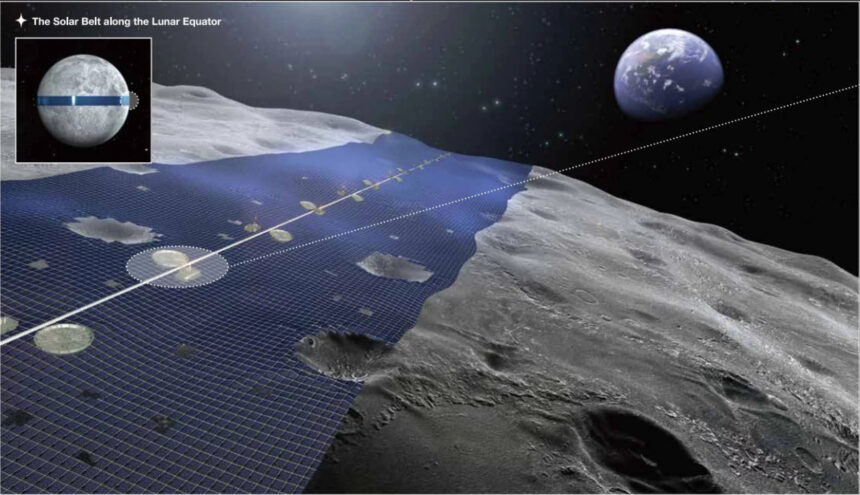
Japanese construction giant Shimizu Corporation had once presented a plan to generate clean energy by building a massive solar power system around the Moon. The concept, known as the “Luna Ring,” proposes placing a continuous belt of solar panels along the Moon’s equator. These panels would collect sunlight and send electricity back to Earth.
According to Shimizu Corporation, the Luna Ring was designed to stretch approximately 11,000 kilometers, or about 6,800 miles, around the Moon’s equator. This location was carefully chosen because the equatorial region of the Moon received steady sunlight for most of the lunar day. Therefore, the Moon had no atmosphere, clouds, or weather disruptions. This allowed solar panels to operate almost continuously.
Under the plan, solar panels installed on the lunar surface would generate electricity around the clock. This power would then be transmitted across the Moon through embedded cables.
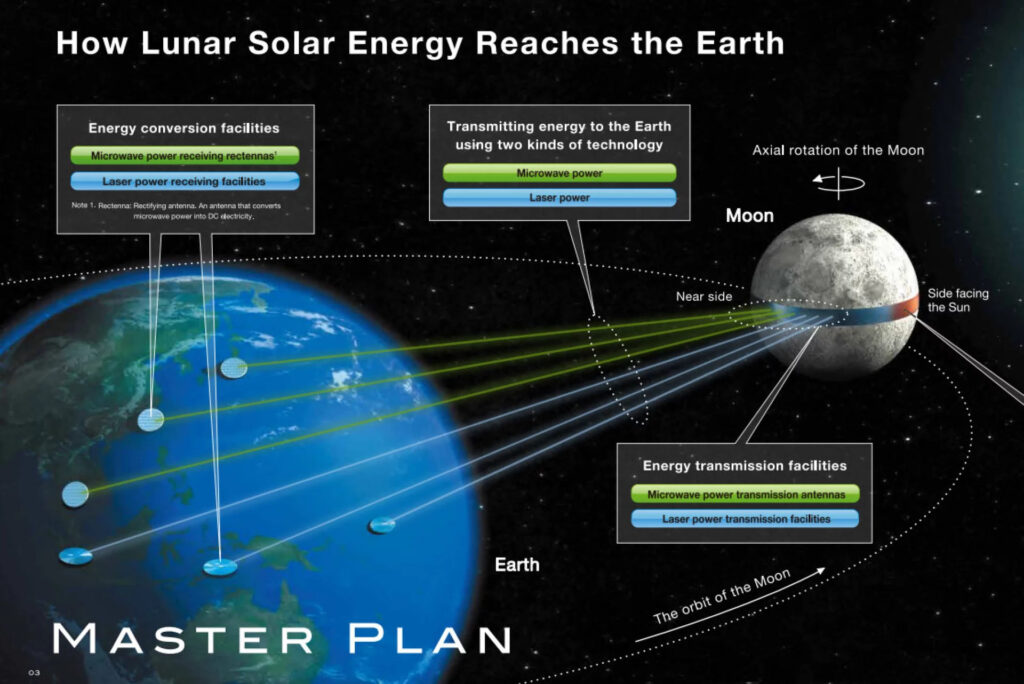
Additionally, it would be delivered to transmission stations located on the Moon’s near side, which constantly faced Earth. From there, the energy would be beamed to Earth using microwave power transmission and high-density laser systems. These would be guided by radio signals to ensure accuracy.
Shimizu estimated that if the Luna Ring were fully completed, it could produce up to 13,000 terawatts of electricity. This amount far exceeded the current global energy demand. Consequently, the system could supply clean power to large parts of the world without relying on fossil fuels. The company described the concept as a long-term solution to climate change and growing energy shortages.
The construction of the Luna Ring was planned as a multi-phase project expected to span nearly 30 years. Shimizu projected that actual construction could begin around 2035, following successful pilot projects and advances in space infrastructure. In addition, the company explained that most of the work on the Moon would be carried out by robots and automated systems. Human presence would be very limited.
To reduce costs and dependence on Earth, Shimizu proposed using materials found directly on the Moon. Lunar soil would be processed to produce concrete, bricks, ceramics, and glass fibers. The company also said water could be created by extracting oxygen from lunar soil using hydrogen brought from Earth. These materials would be used to build roads, foundations, and structures needed to support the solar panels.
Remotely controlled robots were expected to handle tasks such as digging, leveling the ground, and laying solar-panel-covered concrete across the Moon’s surface. Shimizu stated that “automation, robotics, and artificial intelligence would be essential to make construction on the Moon possible at this scale.”
The idea of space-based solar power was not entirely new. In 2009, U.S. energy company Pacific Gas and Electric approved a deal with a startup called Solaren. That company planned to generate solar power in orbit and beam it down to Earth. Although that project faced delays, experts said it proved that the concept was technically possible. One official later described the idea as “something that feels like science fiction but deserves serious attention.”
Supporters of lunar solar power pointed out that solar panels in space could generate electricity 24 hours a day, unlike Earth-based systems that depended on daylight and weather conditions. This constant energy supply could help replace coal and gas power plants. These plants were currently used to provide stable baseline electricity.
Interest in alternative energy sources increased in Japan after the 2011 Fukushima nuclear disaster, which damaged public confidence in nuclear power. Although Shimizu developed the Luna Ring idea before the accident, the ongoing energy debate made the proposal more relevant. Moreover, many experts believed Japan would need to explore bold renewable energy options to secure its future power supply.
The cost of launching equipment into space, building factories on the Moon, and maintaining robotic systems was expected to be extremely high. Legal issues also remained unresolved. For example, international space law did not clearly define ownership or construction rights on the Moon. Some experts warned that legal disputes could delay or even block the project.