
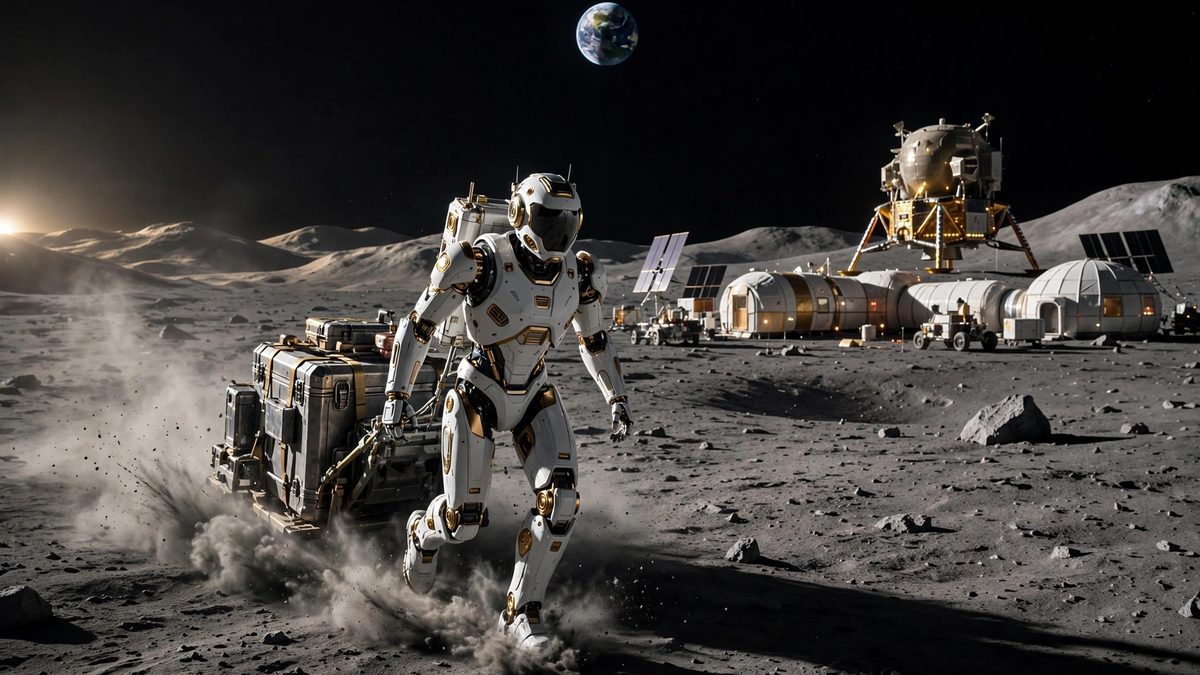
NASA humanoid robots could soon become the hardest working members of future Moon and Mars crews. At Johnson Space Center in Houston, engineers led by Shaun Azimi are building and testing human shaped machines. One day these machines will haul equipment, fix dangerous hardware and prepare the ground before astronauts even arrive. This is not science fiction. It is real research happening right now.
The effort comes from the NASA Dexterous Robotics Team, the group building NASA humanoid robots for deep space. This group has spent years pushing the limits of what machines can do in space. According to Popular Science, the team wants these machines to handle the riskiest parts of a mission. They want robots to stand in for humans where the danger is greatest. The machines would move heavy cargo across the surface. They would handle repairs that could expose astronauts to radiation or sharp lunar dust. They would scout new terrain and help build the bases where crews will live and work. Tomorrows World Today covers the same research. The outlet notes it will shape how crews build a long term presence on the Moon and Mars.
Meet Valkyrie the star of the program
The star of the NASA humanoid robots program is Valkyrie, also known as R5. This towering machine stands about 1.8 meters tall and weighs 125 to 129 kg. It has 44 degrees of freedom, which means it can move its body in 44 different ways. NASA built Valkyrie at Johnson Space Center around 2012 to 2013 for the DARPA Robotics Challenge. Only 3 to 5 units exist in the world. One unit just returned home after spending 10 years at the University of Edinburgh in Scotland.
What the NASA humanoid robots will actually do
These NASA humanoid robots are being trained for the jobs astronauts should not have to do alone. They will transport heavy equipment across rough ground. They will carry out hazardous repairs outside the base. They will scout the surface and map safe paths for the crew. They will even help build infrastructure before the first astronauts land. It is tough work in brutal conditions. The robots must survive microgravity, clinging lunar dust and constant solar radiation.

The team puts it simply: “Our team is not trying to replace human explorers with robots, but instead make human exploration safer and more sustainable.”
None of this will happen without long and careful testing on Earth. The team runs trials of the NASA humanoid robots at the iMETRO facility, a test site built for space hardware. NASA is also working with Woodside Energy of Australia to test remote operations. The goal is simple. An operator on Earth or in orbit should guide a robot through complex tasks. Those tasks will happen on the lunar surface, far from any human helper. Make no mistake: this is an R and D and testing program, not a deployment announcement.
NASA has trusted robots in space for a long time, and NASA humanoid robots are the next chapter. Robonaut 2 spent 7 years aboard the International Space Station, working inside the orbiting laboratory. Valkyrie is the next big step. It moves on two legs like a human. That means it can use tools, climb ladders and walk through doors built for astronauts. The wider humanoid industry is moving fast too. Companies like AgiBot in China are already building humanoid machines by the thousand. NASA brings something different to the table: machines built for the harshest places in the solar system.
All of this work feeds into the Artemis program. Artemis is NASA’s plan to return astronauts to the Moon and stay there. A permanent base on the Moon needs builders, haulers and repair crews that never get tired. That is exactly the role these NASA humanoid robots will fill. New lunar rovers will also carry Artemis crews across the surface. From the Moon, the lessons learned will carry over to Mars. Dreamers are already sketching bold ways to cross that gap. Some imagine bullet trains to the red planet and beyond. A long term human presence on both worlds will depend on machines that can prepare the ground safely.

The MES Times Take
This is a story about teamwork, not replacement. NASA is not building its humanoid robots to push astronauts aside. It is building partners that can take the first dangerous steps so humans do not have to. Every antenna Valkyrie plants and every rock it lifts is one less risk for a future crew.
One day soon, metal footprints will follow human ones across the Moon, and every astronaut will come home safe.
Read also: NASA’s Curiosity Rover Passes 5,000 Martian Days, Still Going Strong After 14 Years
