
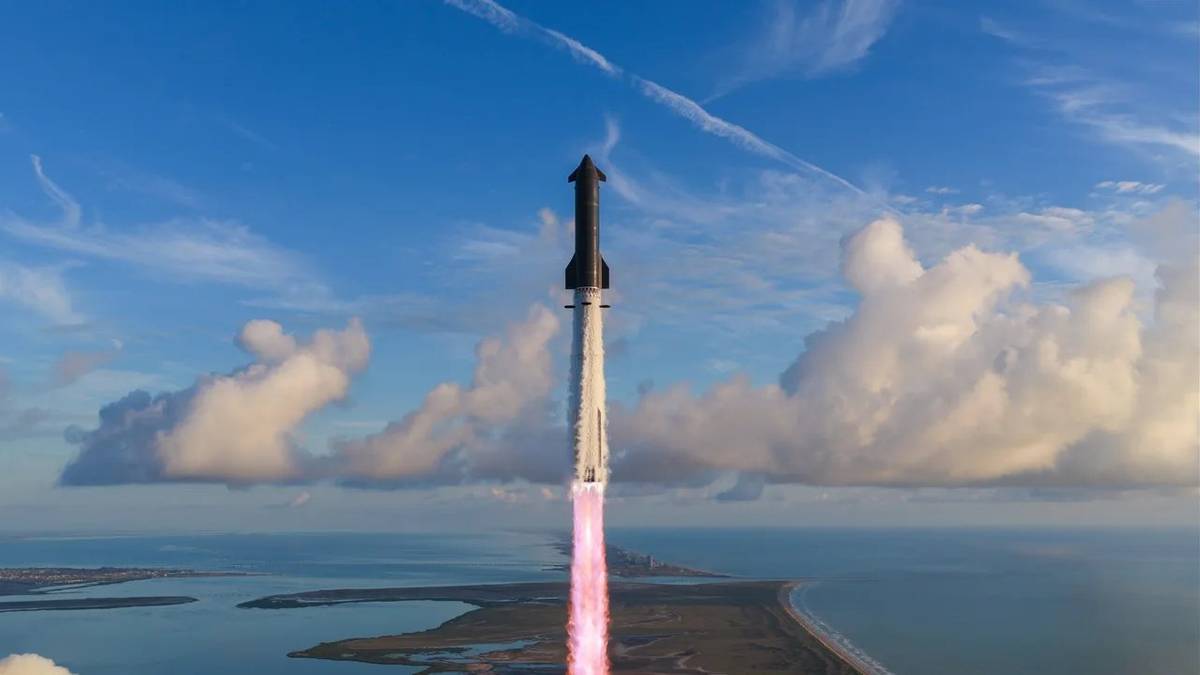
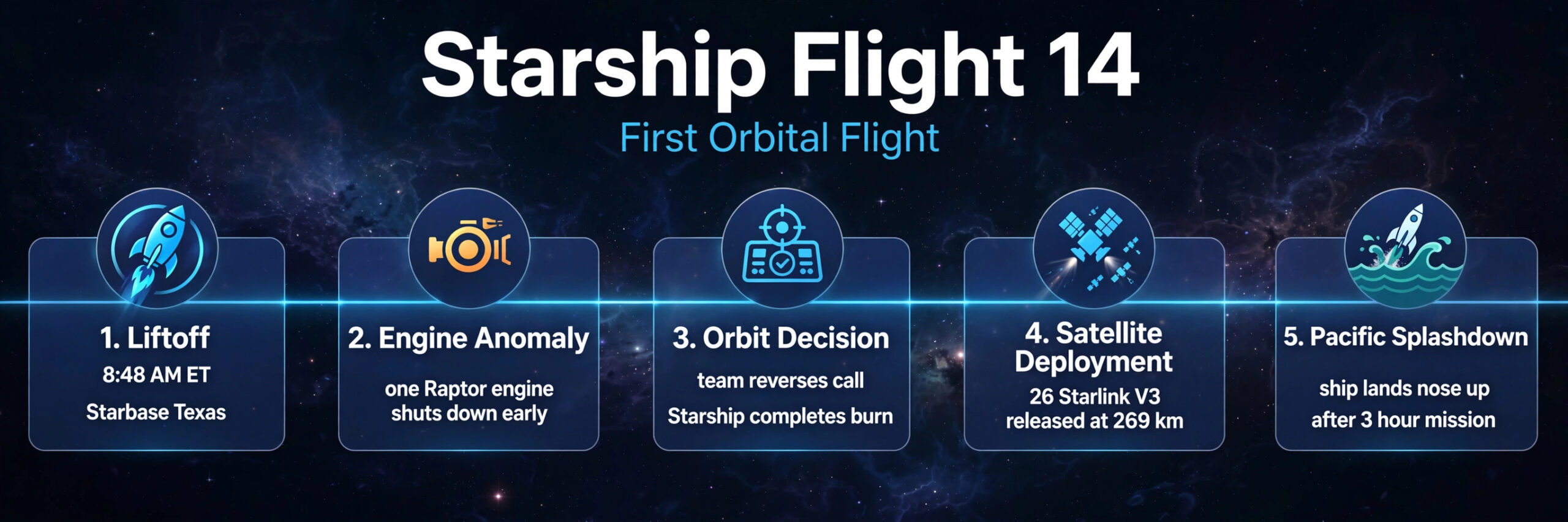
SpaceX finally did it. On September 28 2026 at 8:48 in the morning Eastern time, Starship Flight 14 lifted off from Starbase in Texas, and this time SpaceX Starship reaches orbit for real after 13 test flights since 2023 that stayed below orbital speed, according to USA Today.
The mission carried Ship 41 on top of a Super Heavy booster. The booster completed its job and made a water landing in the Gulf of Mexico. Then the Starship upper stage pushed on toward orbit, and this time it kept going. Engineers in mission control had waited years for this moment.
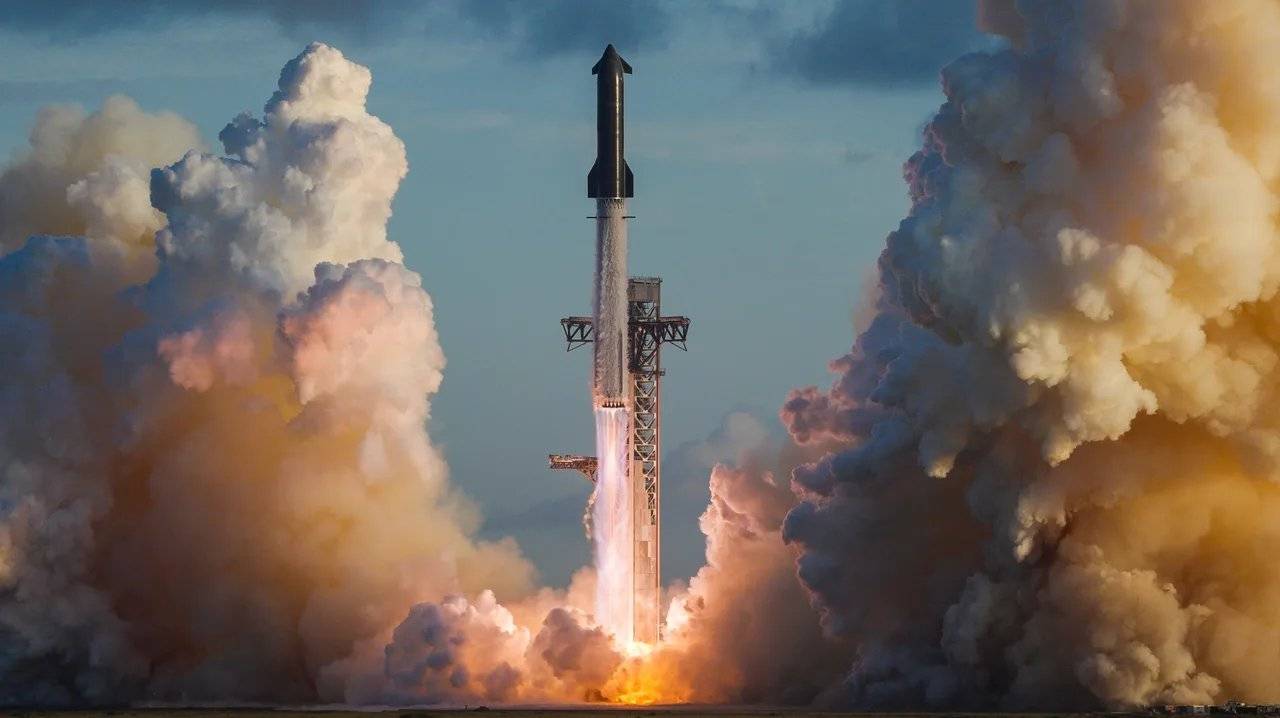
Once in orbit, Starship did what it came to do. It deployed 26 next generation Starlink V3 satellites one by one at an altitude of about 161 miles, which is 269 kilometers above Earth. Elon Musk wrote on X that all 26 Starlink V3 operational satellites deployed and are operating nominally. The satellites will now raise their orbits over the coming weeks and start serving customers soon after, according to New Space Economy.
That makes Flight 14 the first revenue generating Starship mission. Every earlier flight was pure testing. This one carried paying cargo to space, which turns Starship from an expensive experiment into a working business tool now that SpaceX Starship reaches orbit. The network has had rough patches too: a recent Starlink outage lasted 2.5 hours and drew a public apology from Musk, a reminder of how much the world now depends on these satellites.
SpaceX Starship Reaches Orbit Despite an Engine Failure
The flight was not smooth. One of the three Raptor engines, the vacuum optimized versions on the upper stage, shut down prematurely during ascent. For a few tense minutes it looked like the dream would slip away again. SpaceX spokesperson Dan Huot told viewers on the live stream that the team had made the call not to commit to orbit, according to Shafaqna.
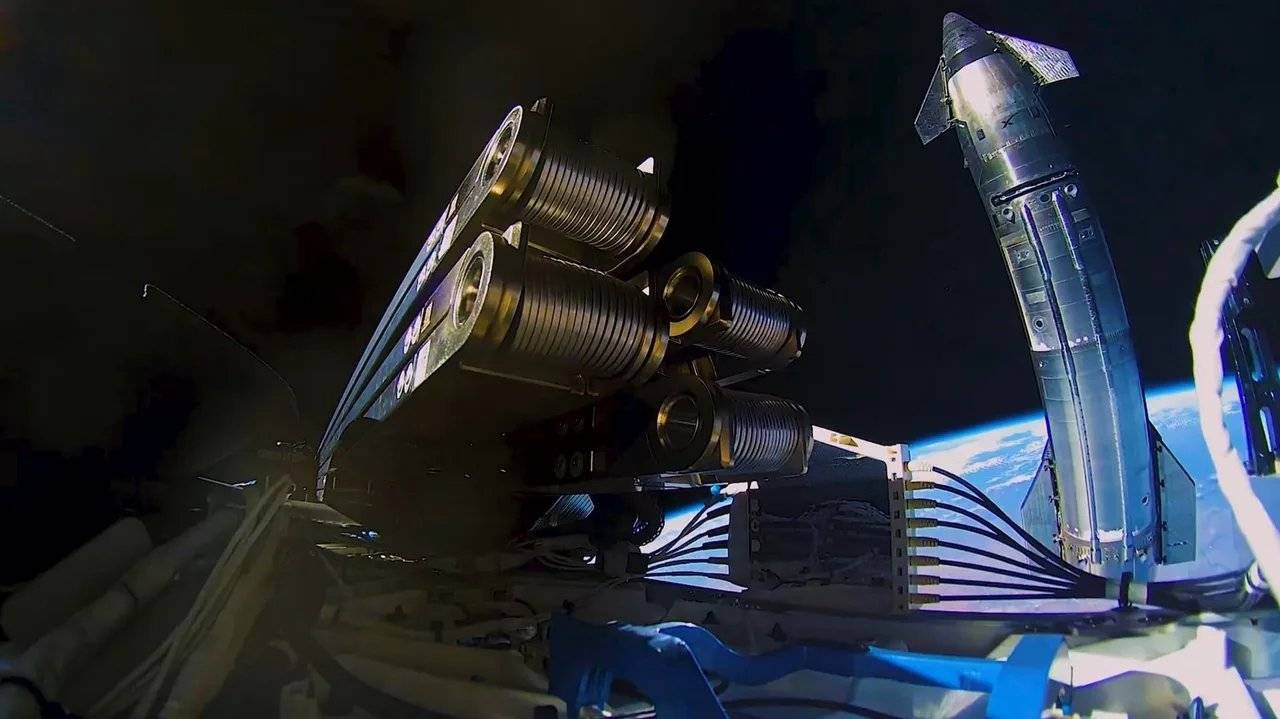
Then the engineers ran their analysis and changed their minds. Minutes after the first call, the team reversed the decision and Starship completed the orbit raising burn with its remaining engines. The spacecraft reached a stable orbit and went on to release all 26 satellites exactly as planned. It was a dramatic save, made in real time, by people trusting their data.
SpaceX then shortened the mission. The original plan called for about 10 hours of orbital tests, but the team cut the flight to about 3 hours. Starship was deorbited for a Pacific splashdown. It came down nose up, tipped over, and burned in a fireball as it hit the ocean. No recovery was planned. The ship had done its job, and SpaceX was satisfied to learn from a controlled ending.
The space world noticed. NASA administrator Jared Isaacman congratulated SpaceX on X after the flight. NASA has a deep stake in Starship because the agency plans to use the spacecraft for future Moon missions, and it has also trusted SpaceX to deorbit the International Space Station at the end of its life. Rivals are not standing still either: China recently completed the first satellite refueling mission in orbit, a reminder that the space race has more than one runner.
Musk looked far ahead, saying Starship is 2 to 3 years away from hourly flights. That is an extraordinary claim: a rocket as tall as a skyscraper launching as often as airplanes take off. If even a fraction of that cadence arrives, the economics of space change. Launching hundreds of satellites in a single flight stops being a milestone and becomes routine freight.
The road here was long. The first Starship test flights began in 2023, and each one ended short of orbit. Some exploded during ascent, some during the return. SpaceX treated every failure as data, fixed what broke, and flew again. Flight 14 was the payoff for a testing style that accepts fireballs on the way to success, and with it SpaceX Starship reaches orbit at last. The Starlink V3 satellites it carried show why the company kept going: Starship can lift far more cargo than any working rocket, and the next generation Starlink network needs exactly that kind of heavy lift to grow fast.
The MES Times Take
The moment SpaceX Starship reaches orbit changes everything about Starship. The rocket was designed to carry people to the Moon and Mars, to launch huge batches of satellites in one go, and to make spaceflight as routine as air travel. None of that is possible without orbit, and now the hardest step is behind them. What happens next is the ramp up: more flights, heavier payloads, and a Starlink network that grows stronger with every launch. The fireball in the Pacific was an ending, but the real story is everything that launches after it.
Read also: Black Holes Aren’t The End New Theory Suggests They Are Tunnels, Not Traps!
Read also: NASA’s Curiosity Rover Passes 5,000 Martian Days, Still Going Strong After 14 Years
