
It seems like hydrogen engines could be the next big thing in the world of cars. While electric vehicles (EVs) have been in the spotlight for zero-emission efforts, hydrogen-powered cars have been in the shadows.
Electric vehicle companies aim to dominate the market by 2030, but hydrogen engines are grabbing a share now. Hydrogen cars are similar to EVs but come with a cool feature called a hydrogen fuel cell, which releases only water vapour. This gives them a decisive edge in the competition for the most eco-friendly ride.
So far, the United States has seen about 2.5 million EVs hit the roads, but as of mid-2022, only around 15,000 hydrogen cars were cruising around, and they’re all in California.
Update (September 2026): BMW iX5 Hydrogen Now Targets 2028
BMW’s hydrogen timeline has shifted since this article was first published. The iX5 Hydrogen now uses a third-generation fuel-cell system co-developed with Toyota, and prototypes are undergoing road testing. BMW is preparing fuel-cell production in Germany and Austria, with series production targeted for 2028 alongside petrol, diesel, plug-in hybrid and battery-electric versions of the X5.
In the coming era of transportation, the focus will be on fast performance, quick refuelling, and eco-friendly options. Hydrogen engines are emerging as a potential game-changer in the automotive industry, aligning with these priorities.
Only a handful of manufacturers are actively developing this technology to lead the way in hydrogen-powered vehicles, and BMW is among them.
According to BMW CEO Oliver Zipse, hydrogen engines are set to play a significant role in various parts of the world in the long term.
A hydrogen fuel-cell vehicle (HFCV) operates with a motor similar to a battery-electric vehicle but uses a stack of fuel cells instead of a heavy battery. These fuel cells combine hydrogen (H2) with oxygen (O2) from the air to produce water vapour and generate electricity. In simpler terms, fuel-cell vehicles are a type of hybrid called fuel-cell hybrid electric vehicles (FCHEV).
ALSO READ: BMW joins Toyota, Kia, and Hyundai in unveiling a hydrogen car
Even though hydrogen is the most abundant element in the universe, it’s typically not found in its pure form and is often combined with other elements. Creating pure hydrogen for vehicles involves an energy-intensive process to break down compounds, usually derived from fossil fuels like natural gas.
While hydrogen fuel-cell vehicles share similarities with electric vehicles (EVs), they have unique qualities that set them apart. Like their counterparts, hydrogen engines can be refuelled quickly and maintain a consistent driving range regardless of temperature changes. Read also: NamX Unveil First Hydrogen Energy Car with Second Refuel.
BMW iX5 Hydrogen
BMW is set to introduce the BMW iX5 Hydrogen, one of three hydrogen-powered vehicles hitting BMW dealerships in 2024.
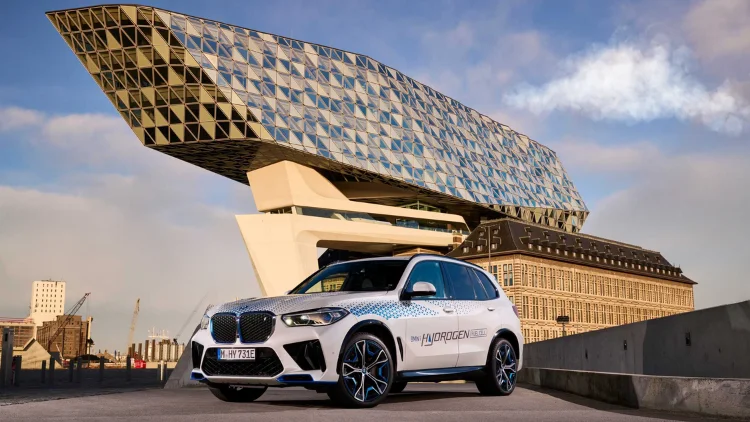
This eco-friendly SUV concept is designed to lead electric mobility, focusing on impressive performance. Meeting the ambitious targets for zero carbon emissions in the coming decades requires a variety of renewable energy sources to meet the growing demand for electrification by businesses, cities, and countries.
Hydrogen is expected to play a crucial role in shaping this future.
Here are some advantages of the BMW iX4 hydrogen:
| Feature | BMW iX5 Hydrogen |
|---|---|
| Horsepower | 400+ |
| Refueling Count | Minimal |
| Fuel Technology | Fifth-generation fuel cell technology |
| Propulsion | Electric motor (BMW eDrive) |
| Performance | Top speed: 115 mph, 0 to 60 mph in 6 seconds |
| Battery | 400-volt battery above hydrogen engines |
| Range | Approximately 313 miles |
| Comparison with EVs | Comparable to top EVs like Tesla Model Y |
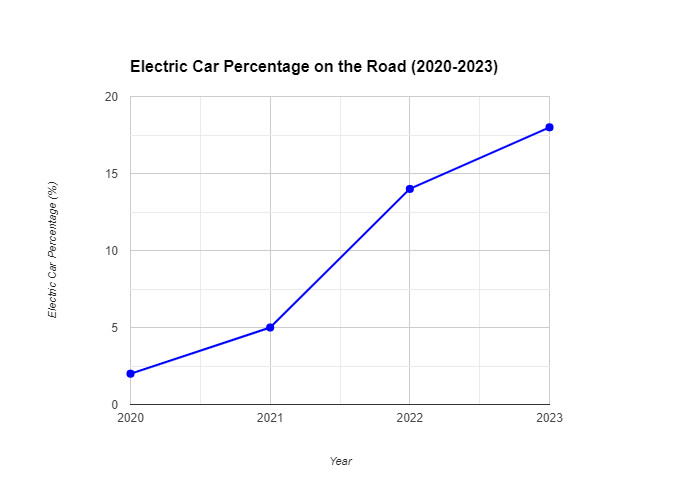
Even though the number of electric cars has rapidly risen in the past three years, the International Energy Agency predicts that only 14% of vehicles will be electric by 2022. Furthermore, this figure is anticipated to increase by another 4% by the end of 2023.
There’s a big chance for hydrogen cars to grab a share of the car market, which is currently dominated by high-emission vehicles.
Manufacturers of hydrogen engines should remember that there won’t be one solution that fits everyone’s mobility needs worldwide. So, in the future, we might see various alternative driving systems coexisting.

What exact problem with hydrogen engines has BMW solved?
Solve one problem (battery smaller), create 20 new problems.
Your may be passionate, but not an expert. So many mistake here, please contact real expert next time.
So, BMW are NOT saying “goodbye to electric cars” – because the article describes an “electric car” – just one that uses a hydrogen fuel cell as its energy store, rather than the more common battery. It’s still got an electric motor, so it’s still an electric car. Just not one that uses a battery to store its energy. Just to reiterate, the hydrogen fuel reacts in the fuel cell to produce ELECTRIC power that then drives an ELECTRIC motor, so it’s an ELECTRIC car. When people can get the basics correct in a supposedly serious article you do start to wonder…
what a bad article. its a complete lie BMW stops electric cars.
What problem have they solved? Doesn’t say.
Considering Hydrogen is the smallest molecule in the universe, a huge problem (even if you can create Hydrogen cheaply and cleanly, which we can’t), is that it leaks. Only way to stop it is either store it under enormous pressure (not practical for a car) or to chill it to -250 degrees (energy intensive).
So have they solved those problems?