

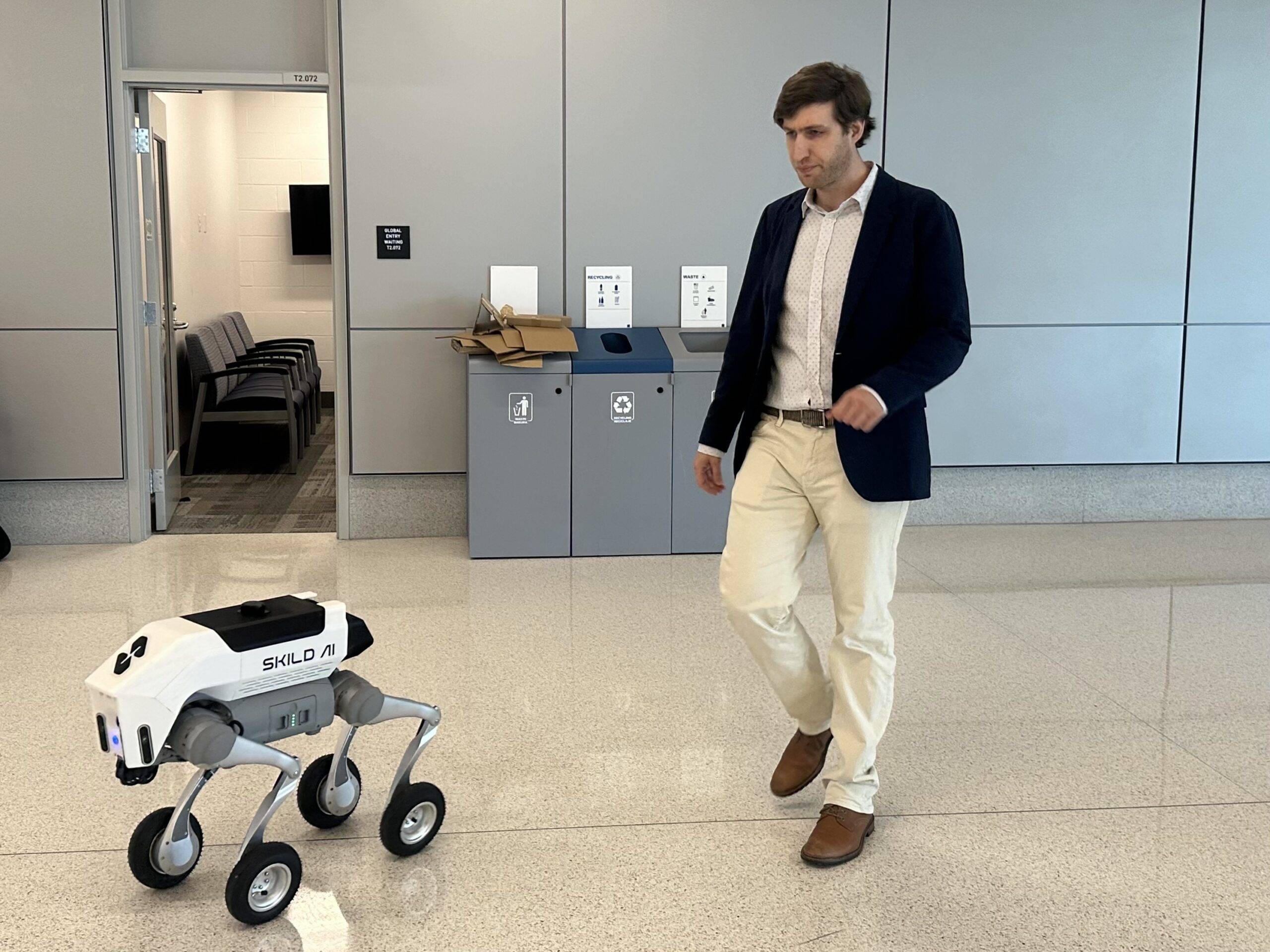
Travelers passing through Pittsburgh International Airport this week may have spotted something new walking beside them. Four robot dogs have started patrolling the Airside Terminal as part of a six month pilot that launched around Sept 29. The machines run on autonomy software from Skild AI, a Pittsburgh startup. They will spend the next half year learning how to help an airport breathe, clean and move.
This is a test, not a permanent deployment. The airport wants to learn what they can do before giving them bigger jobs. The pilot runs through the PIT xBridge innovation program, the airport’s in house lab for testing new ideas, as first reported by Technical.ly.
What the robot dogs do in phase one
Right now, they have one main job: air quality. They walk through the terminal and monitor indoor air quality around the clock. When a reading falls out of range, the system flags it for staff. It is the quiet kind of work that machines do best, steady, patient and constant. Clean air matters in a building that moves thousands of people every day. The airport staff gets the alert and can fix the issue quickly. It is a small step, but it can make the air better for everyone passing through.
Later in the pilot, the same machines will take on bigger tasks. They will learn to identify spills, full trash bins and crowded areas. So a spilled coffee near a gate or an overflowing bin at a food court can be spotted in real time. The alert goes straight to the right team. That kind of early warning can keep a busy terminal running smoothly.

The tech behind the dogs
The brains behind the machines come from Skild AI. Skild AI is a Pittsburgh startup founded by Carnegie Mellon professors Deepak Pathak and Abhinav Gupta. The company builds autonomy software that lets them see, navigate and act in the real world on their own. Quadruped robots are having a moment right now. UBTech has started delivering its U1 companion robot to homes across China, a sign that friendly machines are going mainstream.
Safety comes first in the plan. Two charging stations keep all four running through the terminal. A Skild team member monitors on site and watches every move the machines make. If a traveler steps in front of one of the robots, it simply stops when its sensors get blocked. The machine waits instead of pushing past. Nobody has to worry about being knocked over by an overexcited robot. Travelers do not need to be afraid of the machines. They are not toys, and they are not security guards either. They are workers on a trial, and they know how to mind their manners.
Two people lead the public side of the airport pilot. Deepak Nayyar is chief technology officer at Pittsburgh International Airport. Sara Ahmadi is Skild’s head of product.
The timing of the launch was no accident. It coincided with IROS 2026, the big international robotics conference held in Pittsburgh, as reported by Robotics Tomorrow. Pittsburgh is the hometown of Skild AI, and the city loves showing its robot dogs to the world. Airports are becoming test grounds for all kinds of machines. Joby Aviation is testing electric air taxis between Manhattan and JFK Airport.
The robotics world is moving fast elsewhere too. Hong Kong just opened three convenience stores run entirely by humanoid robots. And AgiBot just built its 20000th robot as China’s humanoid boom speeds past rivals.
The MES Times Take
A pilot is the smartest way to bring robots into a busy airport. Nobody is pretending four robot dogs will run the terminal tomorrow. Instead, Pittsburgh is testing one small job at a time, starting with the air nobody sees, and letting humans stay firmly in charge. If the test works, other airports will follow. The humble robot dog will earn its place the honest way, by doing useful work day after day. Sometimes the future does not arrive with noise. It walks in quietly on four legs, checking the air.
Read also: China Sets World Record With 116 Underwater Robots Swimming Together
Read also: Figure’s Retired Humanoid Robots Take a Terminator Style Leap Into Molten Steel
